- Introduction
- How Air Quality Affects the Process and Safety
- Why Does a Spray Booth Need Ventilation?
- Types of Spray Booths and Their Characteristics
- How Ventilation Systems Work
- How to Calculate System Parameters
- Multi-Stage Air Filtration
Introduction
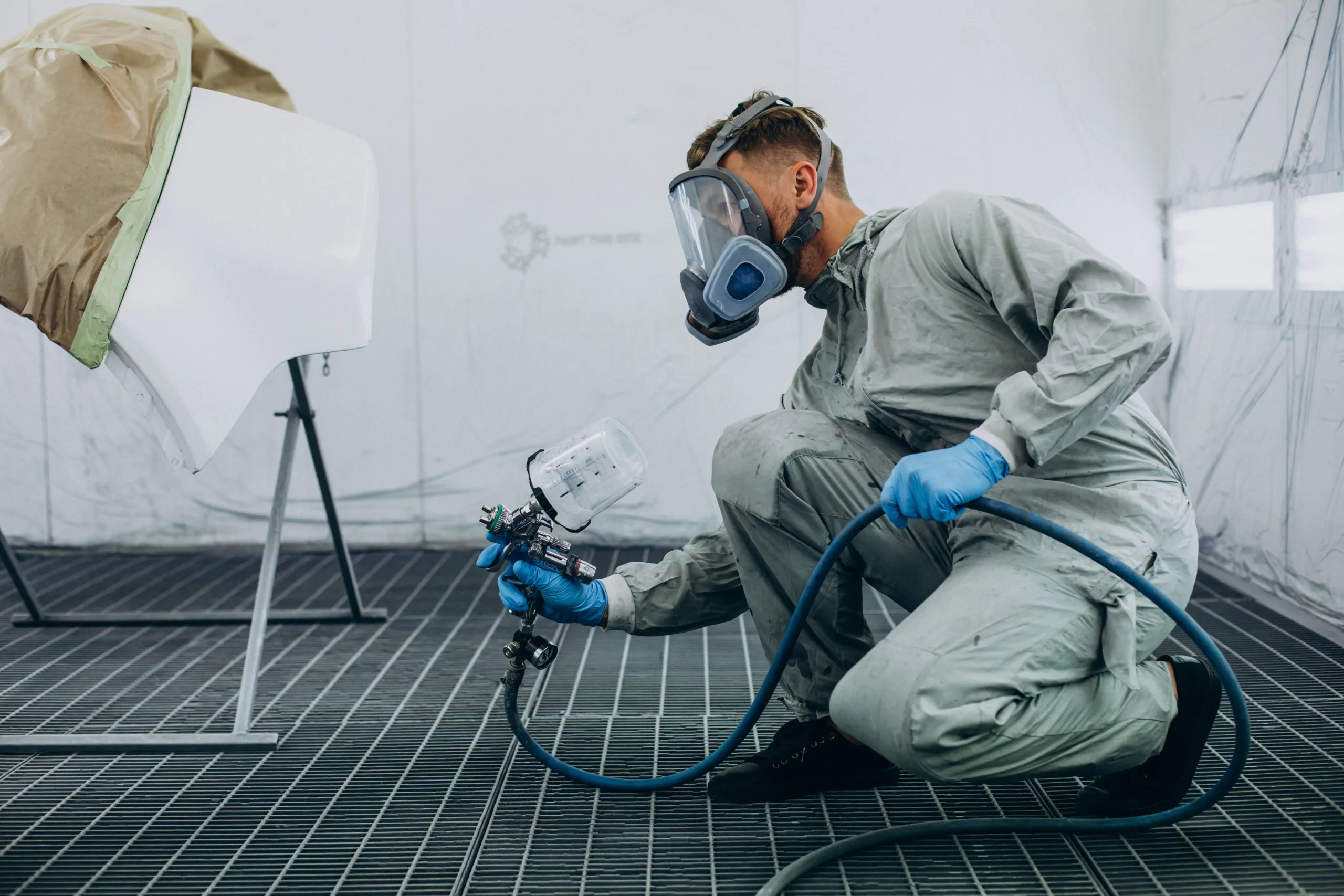
One of the key requirements for operating a spray booth is ensuring a safe working environment and protecting operator health. Air filtration plays a critical role in achieving high-quality coating results, as the presence of dust, fine particles, paint mist, and solvent vapours can negatively affect the finish. Equally important is proper air filtration during the forced hot-air drying phase — any solid particles that enter at this stage can damage an otherwise flawless coating.
In this article, we explain how a modern air filtration system works and why air treatment is not merely a supplementary process, but one of the fundamental prerequisites for professional-quality painting. Modern spray booths use multi-stage air filtration to ensure optimal conditions for painting and drying.
How Air Quality Affects the Process and Safety
Contaminated air inside a spray booth is a painter’s worst enemy. Even the smallest dust particles and fibres settle on freshly painted surfaces, causing defects such as orange peel, fisheyes, and craters — all of which lead to costly rework.
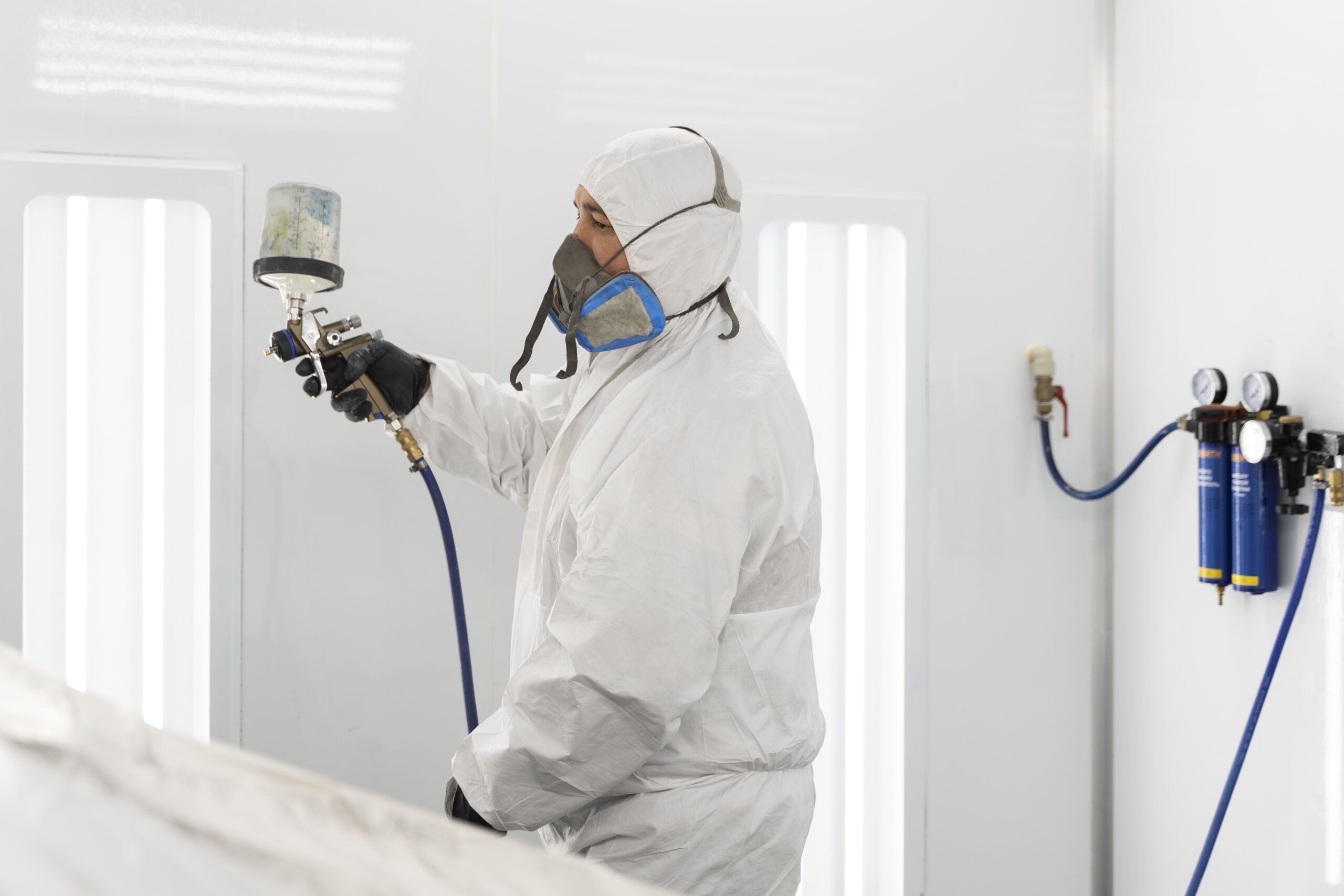
From a safety perspective, spray booth ventilation addresses a critical need: the removal of solvent vapours. Volatile organic compounds (VOCs) can form explosive atmospheres when their concentration reaches critical levels. Effective filtration and ventilation in the spray booth prevent the accumulation of toxic vapours, minimising both the risk of explosion and the health hazards for operators.
Why Does a Spray Booth Need Ventilation?
The pre-filtration system is designed to remove coarse contaminants from incoming air and provide additional filtration of recirculating airflow within the booth. This stage significantly reduces the contaminant load before the main filtration stage. The system may include ventilation filters of various types, providing air filtration at class G2–G4.
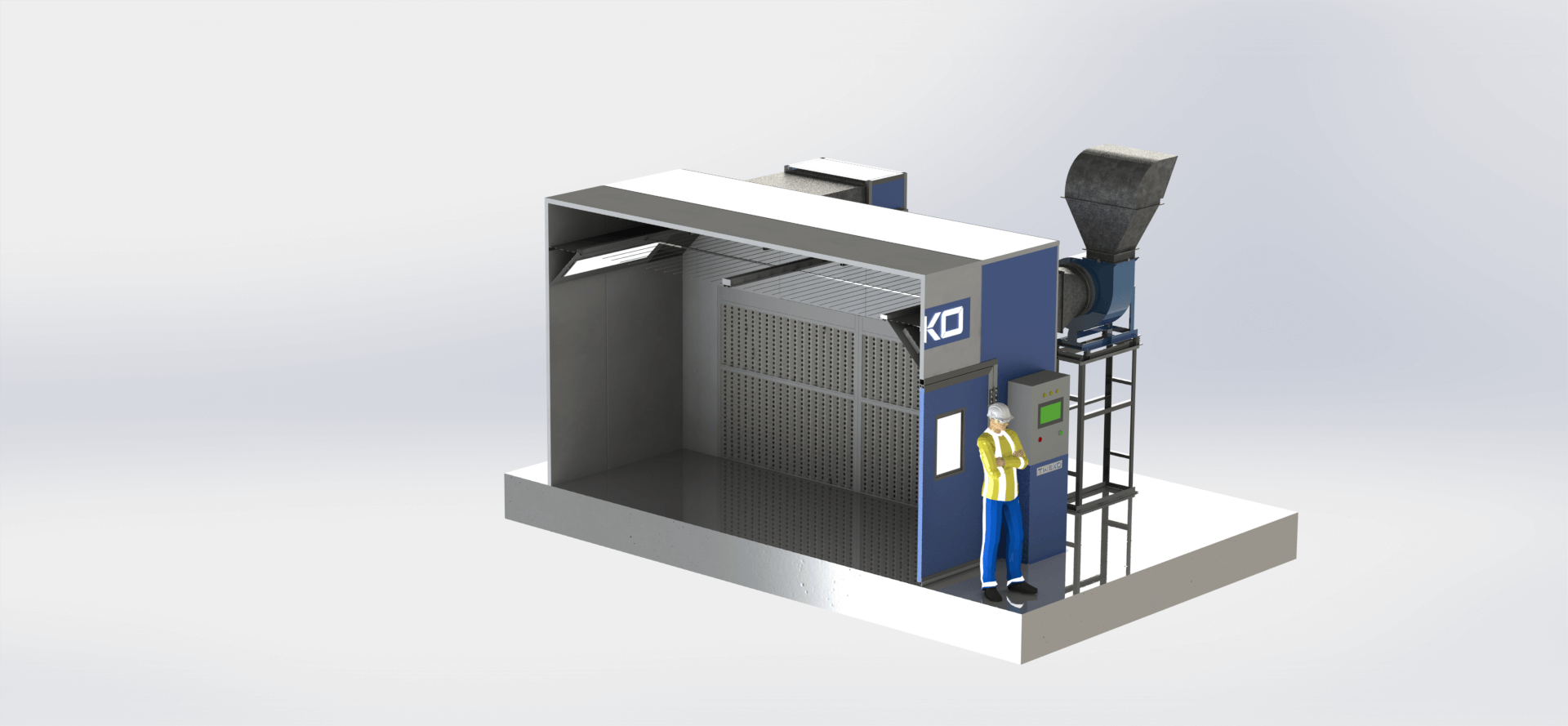
The primary function of the spray booth ventilation system is to create a directed laminar downdraft airflow pattern, which pushes paint mist downward and directs it into the filtration system. Without forced air movement, paint particles would circulate chaotically, contaminating equipment and the operator. The ventilation system also maintains stable temperature and humidity levels essential for proper polymerisation of the coating.
Types of Spray Booths and Their Characteristics
The choice of ventilation system depends directly on the type of spray booth in use. Depending on production requirements, the following types are distinguished:
- Dry spray booths. Optimal for workshops with low workloads. Air filtration is carried out using replaceable dry filters. They are easy to maintain and require no water supply.
- Water curtain spray booths. These use a water curtain to capture paint overspray and fine particles. This filtration method offers more efficient overspray removal and is widely used in industrial paint shops and large-scale production facilities.
- Paint and drying booths. These industrial spray booths are equipped with high-capacity heat exchangers. In drying mode, the temperature rises to 60–80 °C, accelerating polymerisation.
- Mobile and modular booths. Flexible solutions for confined spaces, enabling a full painting cycle at temporary workstations.
Modular booth systems are also available, with structures composed of individual modules that can be adapted to specific production requirements. Such solutions allow booths of various sizes and configurations to be created, providing flexibility in the production process. Modular systems are particularly in demand where a customised approach is required for different types of work.
How Ventilation Systems Work
For efficient operation, a spray booth must be equipped with two types of systems:
- Supply air system. Draws in outside air, heats it, and delivers it from above through the ceiling plenum. This creates a laminar downdraft airflow pattern that eliminates turbulence and dust agitation.
- Exhaust ventilation system. Ensures the removal of contaminated air. The exhaust system is typically located in the lower section of the booth, creating a low-pressure zone. This causes heavy paint mist to settle onto the floor filters, helping to protect the painter’s respiratory system.
A dual-motor system is widely considered the most effective configuration, with the supply and exhaust cycle fully synchronised.
How to Calculate System Parameters
Correct calculation of the spray booth ventilation system helps eliminate dead zones where paint mist could accumulate. The following points require particular attention:
Air Change Rate
The air change rate is the key parameter of a spray booth ventilation system. In professional booths, it ranges from 80 to 120 air changes per hour, meaning the air is fully replaced every 30–45 seconds.
Exhaust Airflow Capacity
To determine the required exhaust airflow capacity, the following formula is used (recommended airflow velocity: 0.25–0.35 m/s):
$$P = S \times V \times 3600$$
Where:
- P — fan capacity (m³/h);
- S — working area of the floor filters (m²);
- V — airflow velocity (m/s).
It is important to balance the system so that supply airflow exceeds exhaust airflow by 5–10%. This creates positive pressure inside the booth, preventing dust from the workshop from entering through door seals.
Multi-Stage Air Filtration
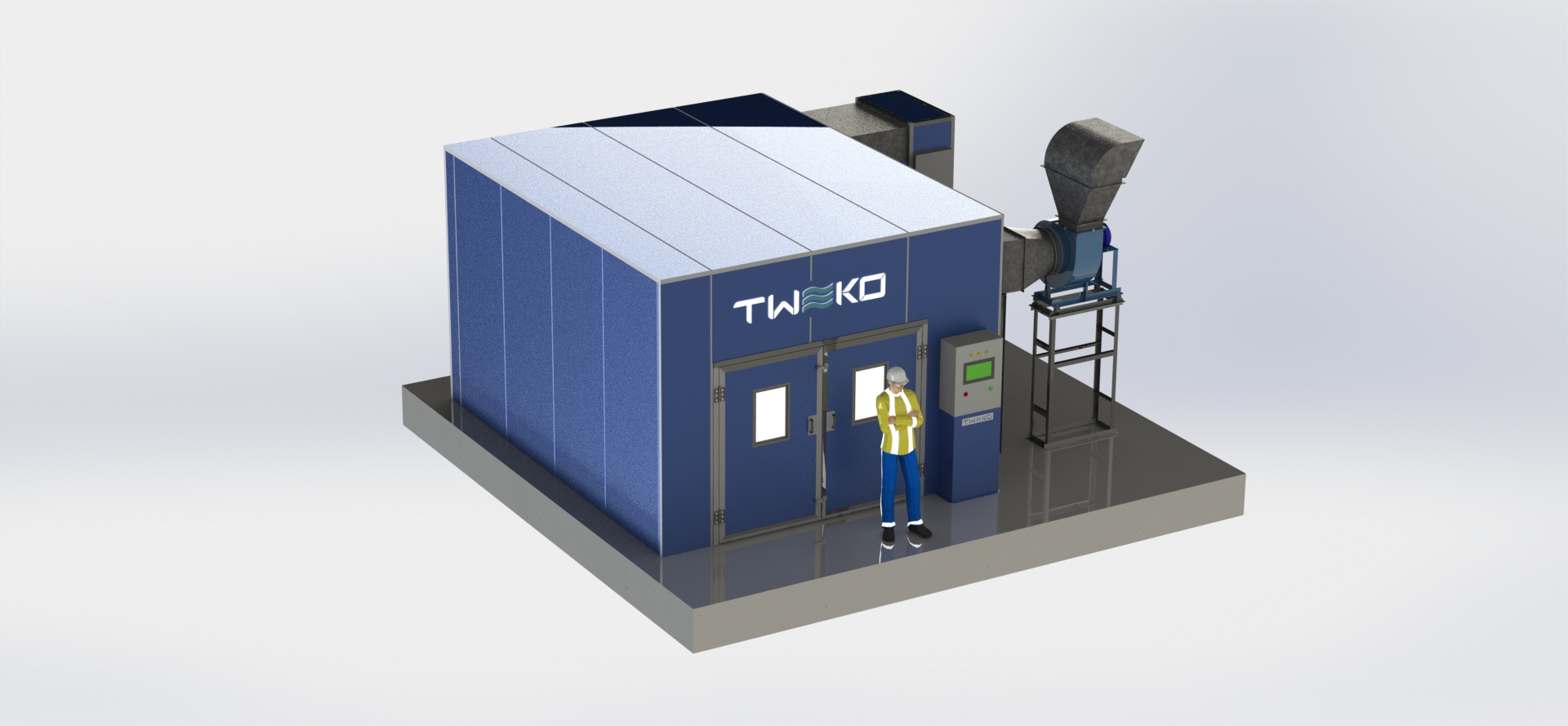
A modern industrial spray booth requires a sequential filtration process comprising the following stages:
- Pre-filtration. Panel filters capture coarse contaminants from incoming air.
- Ceiling filtration. Fine filter media capture particles up to 5 microns in size.
- Floor filtration (paint-stop). Specialised glass-fibre media capture sticky pigment particles.
- Carbon filtration. The final filtration stage removes odours and volatile chemical compounds from exhaust air.
A properly designed ventilation system is essential for achieving consistent coating quality, maintaining workplace safety, and ensuring efficient paint shop operation. Only by adhering to air change and temperature requirements can consistently high-quality finishing results be achieved.