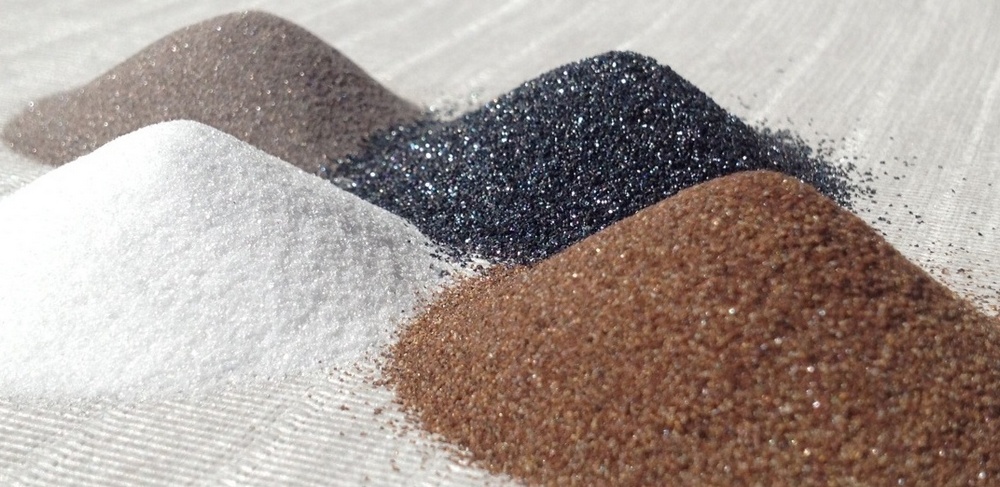
- What kind of sand is used for sandblasting?
- Types of sand for sandblasting machine
- Best sand for sandblasting – comparison table 2025
- Fine, medium and coarse sand fractions
- How to choose the right sand for your job
- Sand consumption rates (kg/m²) + factors
- Common mistakes when choosing sand
- Where to buy sand for sandblasting
- How to prepare sand before use
- FAQ – most popular questions
Need to restore an old part to its former glory or prepare the surface for a shiny new coat of paint? Sandblasting is a real superhero in the world of renewing old material. Using a powerful stream of compressed air and an abrasive material — most often sand for sandblasting — it can easily deal with rust, carbon deposits, scale and other signs of time. Whether it is used in construction, mechanical engineering or carpentry, sandblasting can cope with a huge range of tasks, giving new life to old materials.
What kind of sand is used for sandblasting?
The most popular answer to the questions “what kind of sand is needed for sandblasting” and “what type of sand is used for sandblasting” is still silica sand (quartz sand). It is cheap, available everywhere and has sufficient hardness. However, in 2025 many countries and companies are gradually abandoning free crystalline silica because of the risk of silicosis, and switching to safer alternatives (garnet, glass beads, aluminium oxide).
Types of sand for sandblasting machine
- Silica sand (quartz) – classic and the most common sand for sand blaster. This is exactly the silica sand for sandblasting that people usually mean. Pros: price and availability. Cons: a lot of dangerous dust.
- River sand – natural, inexpensive, but contains impurities and is less durable.
- Garnet – today is considered by professionals as the best sand for sandblasting: low dust, 5–7 times reusable, environmentally safe.
- Glass beads and aluminium oxide – not sand in the literal sense, but very popular modern abrasives.
Best sand for sandblasting – comparison table 2025
| Abrasive | Hardness (Mohs) | Dust level | Reusable | Price level | Best for |
|---|---|---|---|---|---|
| Silica sand (quartz) | 7 | High (dangerous) | No | Very low | Budget projects |
| Garnet | 7.5–8 | Very low | Yes (5–7 cycles) | High | Professional & eco |
| Glass beads | 5.5 | Minimal | Yes (up to 30 cycles) | Medium | Delicate surfaces |
| Aluminium oxide | 9 | Medium | Yes | High | Aggressive cleaning |
Fine sand for sandblasting and other fractions
The size of the grains (fraction) directly affects the result and possible damage to the surface.
- Fine sand for sandblasting (0.1–0.5 mm) – gentle cleaning of car bodies, aluminium, removal of paint from thin metal.
- Medium fraction (0.5–1.0 mm) – universal, 90 % of all work.
- Coarse (1.0–2.0 mm) – concrete, thick rust, ship hulls, heavy structures.
The coarser the abrasive, the higher the risk of damaging soft materials.
How to choose the right sand for your job
To understand what kind of sand you need for sandblasting:
- Delicate and thin metals → fine sand for sandblasting or glass beads
- Standard car or metal workshop → silica sand for sandblasting 0.5–1 mm or garnet
- Maximum ecology and minimum dust → garnet or glass beads
- Very hard surfaces and thick rust → aluminium oxide or coarse garnet
Sand consumption for sandblasting + factors that affect it
Average real consumption in 2025:
- Easy surface cleaning – 5–10 kg per m²
- Rust removal – 10–25 kg per m²
- Deep cleaning (thick paint + scale) – 30–50 kg per m²
In a closed blastroom with collection and sieving, consumption can be reduced by 30–50 %.
Factors that increase consumption:
- Hard and uneven surface
- Thick layers of old paint or rust
- Use of cheap silica sand (breaks faster)
- Low pressure or inexperienced operator
- Wet abrasive
Common mistakes when choosing sand for sandblasting
- Using ordinary building sand – quickly clogs the nozzle and gives poor results.
- Buying wet sand – it sticks and causes blockages.
- Ignoring dust protection when working with silica sand (health risk).
- Taking too coarse fraction for delicate surfaces – irreversible damage.
- Not sieving reusable abrasive – the second cycle becomes less effective.
Where to buy sand for sandblasting
- Silica sand for sandblasting – any construction hypermarket or sand quarry.
- Best sand for sandblasting (garnet, aluminium oxide, glass beads) – specialised abrasive suppliers or online shops. They guarantee exact fraction and purity.
How to prepare sand before use
If you bought ordinary quartz sand:
- Sift through a sieve of the required fraction.
- Dry thoroughly (moisture ≤ 0.2 %).
- Remove large debris, clay and organic impurities.

FAQ – most popular questions about sand for sandblasting
1. Can I use ordinary beach or river sand?
No. It contains salt, clay and uneven grains – it will clog the equipment.
2. Is silica sand banned?
In many EU countries and some US states – yes, because of silicosis. Garnet and other alternatives are recommended.
3. What is the best sand for sandblasting a car?
Fine garnet 0.2–0.6 mm or glass beads – no damage and almost no dust.
4. How many times can garnet be reused?
5–7 cycles with proper sieving.
5. What fraction for removing paint from metal?
0.5–1.0 mm is the golden mean.
Choose the right sand for sandblasting and follow the recommendations above – and you will get a perfect result with minimum consumption and maximum safety.