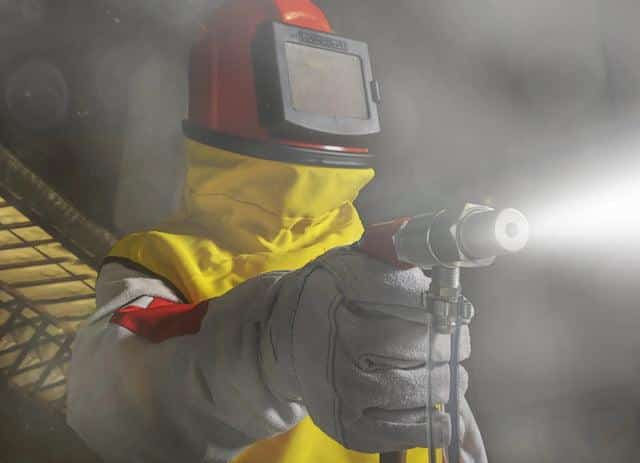
A sandblasting gun (or sandblast gun) is a tool used to clean surfaces of old coatings, rust, dirt, and to shape surfaces using a stream of high-pressure compressed air mixed with abrasive material. The invention of sandblasting technology opened new horizons in industry, restoration, and artistic projects, enabling fast and efficient processing of various materials such as metal, wood, concrete, glass, or ceramics. This method has become essential in many fields, delivering a level of quality unachievable by other means:
- Industrial Applications: Removing rust and old coatings from ships, bridges, machinery, and in the automotive industry.
- Renovation and Restoration: Preparing surfaces of historical objects, sculptures, furniture, or structural elements for new coatings.
- Artistic Uses: Creating textures, frosting glass, or decorative surface treatments.
- Surface Preparation: Prepping surfaces for painting, galvanizing, or applying other coatings.
Types of Sandblasting Guns
There are various types of sandblasting guns, broadly categorized into gravity-fed, pressure-fed, and siphon models. Each offers distinct advantages depending on the specific task:
- Gravity-Fed Guns: Suitable for light to medium tasks, as the abrasive is fed to the nozzle by gravity.
- Pressure-Fed Guns: Ideal for large-scale work, offering higher productivity and the ability to use heavier abrasives.
- Siphon Guns: Typically used for small to medium jobs, with lower output but effective for detailed parts.
When choosing a sandblasting gun, consider the desired stream intensity, material type, and abrasive particle size.
| Gun Type | Operating Principle | Advantages | Disadvantages |
|---|---|---|---|
| Gravity-Fed Guns | Abrasive fed by gravity | Simple, cost-effective, low air consumption | Lower productivity, limited abrasive options |
| Pressure-Fed Guns | Abrasive fed under compressed air pressure | High speed, productivity, effective for large areas | High air consumption, more expensive, requires dust filtration |
| Siphon Guns | Abrasive drawn via vacuum tube | Affordable, cost-effective, easy to maintain | Lower productivity, requires clean, dry abrasives |
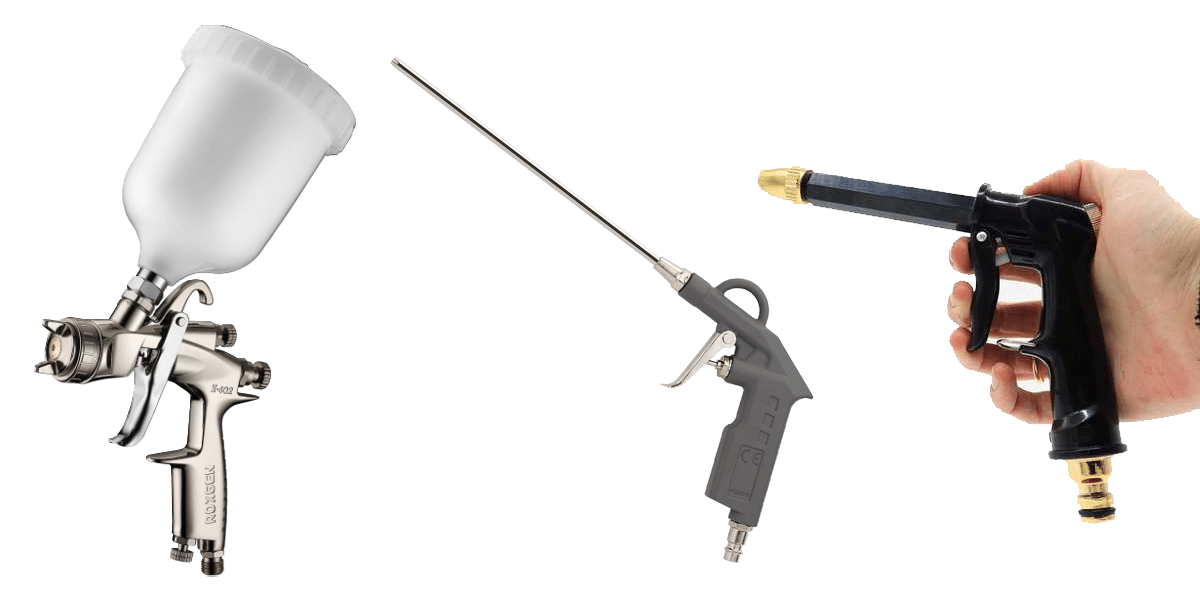
Gravity-Fed Sandblasting Guns
These models operate on the principle of gravity-fed abrasive delivery. They are suitable for light to medium tasks, such as cleaning small metal parts, preparing surfaces for painting, or removing rust from thin metal items.
Advantages:
- Simple design and ease of use.
- Lower air consumption, compatible with less powerful compressors.
- Ideal for spot cleaning and delicate materials.
Disadvantages:
- Slower abrasive feed compared to pressure-fed models.
- Limited abrasive options due to lower feed strength.
Pressure-Fed Sandblasting Guns
These models operate under compressed air pressure from a compressor or tank. They provide high speed and force, making them suitable for large-scale tasks.
Advantages:
- High productivity for quick cleaning of large surfaces.
- Can use heavy, coarse abrasives (e.g., corundum, slag, steel shot).
- Perfect for cleaning metal structures, removing old coatings, or prepping surfaces for welding or anti-corrosion treatment.
Disadvantages:
- High air consumption requiring a powerful compressor.
- More expensive and complex to maintain.
- Generates significant dust, necessitating effective extraction or use in enclosed sandblasting chambers.
Siphon Sandblasting Guns
Siphon models work by vacuum suction of abrasive through a tube. They are often used for small to medium tasks, such as restoring car parts, treating glass, or cleaning sensitive materials.
Advantages:
- Lower air consumption compared to pressure-fed models.
- Relatively simple maintenance and versatile abrasive compatibility.
- Affordable and cost-effective.
Disadvantages:
- Lower productivity, limiting their scope.
- Require clean, dry abrasives for effective operation.
- Less effective for removing stubborn contaminants or thick coatings.
Sandblasting is a versatile and effective method for cleaning and preparing surfaces across industries, from manufacturing to art. Its ability to thoroughly remove dirt, rust, and old coatings ensures optimal adhesion for new materials and finishes. Using a sandblasting gun not only extends the lifespan of structures and products but also opens up creative and design possibilities.
Choosing the right abrasive material is key to ensuring sandblasting efficiency. It impacts not only surface cleaning quality but also reduces material costs, equipment maintenance, and extends service life.
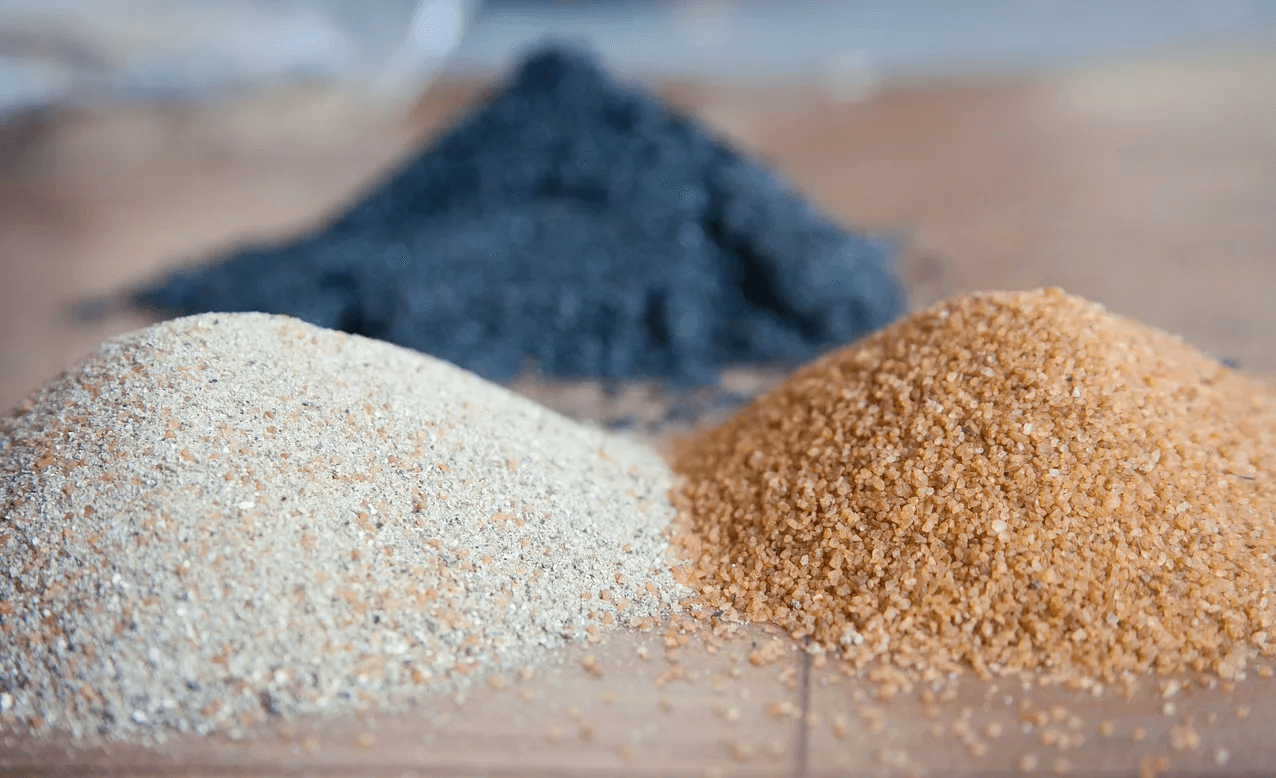
How to Choose the Right Abrasive Material?
Selecting an abrasive depends on factors like surface type, desired roughness, reusability, safety, cost, and environmental impact. Key considerations include:
- Surface Type
- Each material requires a suitable abrasive for optimal efficiency and minimal damage:
- Metals – Hard, aggressive abrasives like corundum, steel shot, cast iron shot, or aluminum oxide suit steel, cast iron, or aluminum.
- Glass, Plastic, Wood – Softer materials need gentler abrasives, such as glass beads, sand, or baking soda.
- Delicate Materials – Sensitive surfaces like thin metals or fragile glass require walnut shells, plastic granules, or corn cob.
- Each material requires a suitable abrasive for optimal efficiency and minimal damage:
- Desired Roughness and Processing Type
- Different abrasives produce varying surface roughness:
- Rough Cleaning – Coarse-grained materials prep surfaces for painting or anti-corrosion coatings.
- Finish Processing – Fine-grained abrasives create smooth or matte surfaces, e.g., for glass or wood.
- Different abrasives produce varying surface roughness:
- Reusability
- Operating costs can be reduced with reusable abrasives:
- Steel shot, cast iron shot, corundum, glass beads.
- Operating costs can be reduced with reusable abrasives:
- Safety and Dust Levels
- Dust production is critical, especially indoors:
- Low-Dust Abrasives – Baking soda, glass beads, steel shot.
- Quartz Sand – Produces significant fine dust, posing health risks.
- Dust production is critical, especially indoors:
- Abrasive Grain Size
- Particle size affects cleaning efficiency:
- Large Particles – Remove contaminants faster, leave rougher textures.
- Small Particles – Create smoother surfaces, reduce material damage risk.
- Particle size affects cleaning efficiency:
- Cost and Availability
- Abrasives vary in price:
- Cheaper – Quartz sand, slag, baking soda.
- More Expensive – Steel shot, aluminum oxide, glass beads.
- Abrasives vary in price:
- Environmental Impact
- Abrasive choice should consider environmental effects:
- Natural Abrasives – Biodegradable and safe.
- Synthetic Abrasives – Reusable, reducing waste.
- Abrasive choice should consider environmental effects:
For best results, analyze the task and working conditions carefully to select an abrasive that ensures efficient cleaning while minimizing costs.
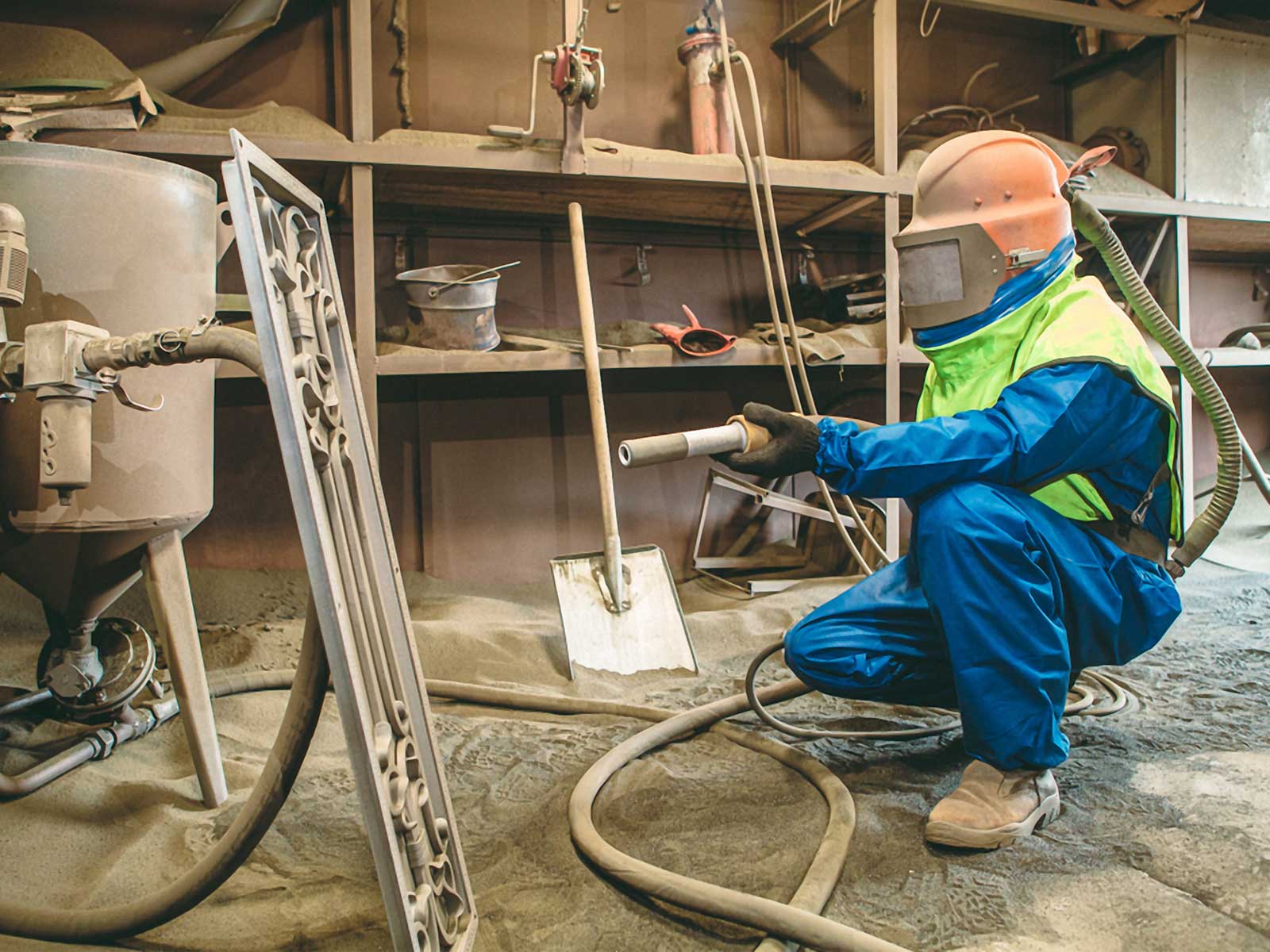
Which Sand for a Sandblasting Gun?
Sand for sandblasting is one of the most commonly used abrasive materials, but not all sand is suitable for sandblasting guns. Choosing the right sand is critical for cleaning quality, equipment durability, and worker safety.
Silica Sand for Sandblasting: Ideal for Safe and Effective Blasting
Silica sand is a widely used abrasive due to its effectiveness and versatility:
- Cost: Silica sand is affordable and highly effective for a wide range of applications.
- Safety: It poses a lower dust risk compared to silicate sand, ensuring a safer work environment. With proper use and ventilation, it minimizes lung damage risks.
- Applications: Ideal for cleaning metal and concrete surfaces, removing rust, coatings, and contaminants, making it highly versatile.
- Environmental Impact: Silica sand has a lower ecological footprint, as it doesn’t pollute water or air as much as other sands. It’s a natural material safe for various industries.
Due to these properties, silica sand is considered a top choice for sandblasting guns compared to alternatives like silicate sand, which carries health risks.
Alternatives to Silicate Sand
- Corundum (Aluminum Oxide):
- High-quality abrasive for intensive metal surface cleaning.
- Very hard and durable, reusable material.
- Quickly removes even tough contaminants.
- Steel Shot or Grit:
- Used for cleaning and strengthening metal structures (shot blasting).
- Minimizes dust and is reusable.
- Enhances metal durability against wear.
- Glass Beads:
- Perfect for delicate cleaning of aluminum, stainless steel, and sensitive materials.
- Creates a uniform matte finish, e.g., in jewelry or aviation industries.
- Plastic Granules:
- Suitable for sensitive materials like wood, composites, or soft metals.
- Removes coatings without damaging the base material.
- Baking Soda (Sodium Bicarbonate):
- Best for delicate cleaning without mechanical damage.
- Eco-friendly, ideal for cleaning engines, car parts, or food industry equipment.
| Sand Type | Cost | Safety | Applications | Environmental Impact |
|---|---|---|---|---|
| Silica Sand | Affordable and effective | Lower dust risk, minimizes lung damage with proper use | Ideal for metal, concrete cleaning, rust, and coating removal | Low impact, natural material |
| Silicate Sand | Very cheap but less effective | High dust risk, causes silicosis without protection | Suitable for hard surface cleaning, rust, and dirt removal | May pollute air and water, restricted in some countries |
| Corundum (Aluminum Oxide) | Higher cost, long lifespan | Safe with proper protection | Intensive metal surface cleaning, very hard material | No environmental issues with proper use |
| Steel Shot/Grit | Higher cost, durable and reusable | Low dust, safe for workers | Metal structure cleaning and strengthening | Suitable for long-term use, minimal impact |
| Glass Beads | Medium cost | Safe, minimizes damage risk | Delicate cleaning of aluminum, stainless steel, sensitive materials | No pollution, eco-friendly |
| Plastic Granules | Medium to high cost | Safe for sensitive materials | Processing wood, composites, soft metals | Eco-friendly, gentle on materials |
| Baking Soda (Sodium Bicarbonate) | Low cost | Eco-safe, no mechanical damage | Cleaning engines, car parts, food industry equipment | Eco-friendly, ideal for sensitive areas |
While silicate sand is affordable and effective, its use carries significant health and environmental risks. In most cases, alternatives like corundum, glass beads, or baking soda offer safer, more efficient results.
Sandblasting is an effective yet potentially hazardous process requiring strict adherence to safety protocols and proper equipment maintenance. Ignoring these can lead to serious injuries, equipment damage, or a degraded work environment.
Safety and Maintenance
Safety Measures for Sandblasting
Respiratory Protection
- Using respirators or helmets with forced air supply is mandatory to protect against fine dust and abrasive particles entering the lungs.
- Effective ventilation is essential indoors to reduce airborne dust concentration.
- Sand containing free silica (SiO₂) can cause silicosis, a dangerous lung disease. Quartz sand use is restricted or banned in many countries for this reason.
Eye and Face Protection
- Protective goggles or helmets with sturdy visors are necessary.
- Direct abrasive impact on eyes can cause severe injuries, including vision loss.
Skin and Body Protection
- Special abrasion-resistant coveralls prevent injuries.
- Durable rubber or leather gloves protect against skin irritation and micro-injuries.
- Closed-toe shoes, ideally with steel toes, shield feet from impacts or falling objects.
Work Area Safety
- Sandblasting should occur in dedicated cabins or isolated areas to minimize dust spread.
- For outdoor work, install protective barriers to contain abrasive scatter.
- Keep flammable materials out of the work zone, as some abrasives can generate static charges.
Additional Safety Measures
- Untrained personnel must not operate equipment. Operators need to understand equipment function, risks, and prevention methods.
- Inspect all system connections—hoses, nozzles, compressor—before starting work.
- Always point the sandblasting gun away from yourself and others.
You can purchase sandblasting equipment, including operator protective gear from CONTRACOR, at https://blastpro.com.ua/. The “Operator Protection” section offers a wide range of specialized safety gear for sandblasting. For more details and to order, visit https://blastpro.com.ua/g134157754-zaschita-operatora.
Sandblasting Equipment Maintenance
For sandblasting equipment to operate efficiently and reliably, regular maintenance and inspections are essential.
- System Cleaning and Inspection
- Clean hoses and nozzles of abrasive residue after each shift.
- Weekly, check and clean dust collection system filters.
- Regularly inspect hoses and seals for leaks or cracks.
- Nozzle Maintenance
- Nozzles wear over time; check their diameter, as enlargement reduces pressure and efficiency.
- Ceramic, carbide, or boron nozzles extend lifespan, especially with aggressive abrasives.
- Compressor and Air System Check
- The compressor must deliver a steady air stream without pressure fluctuations.
- Monitor compressor oil levels and replace as per manufacturer guidelines.
- Drain condensate from the system to prevent corrosion and contamination.
- Abrasive Material Inspection
- Check abrasive cleanliness and size before each use—contaminated or overly fine particles can clog the system.
- For reusable abrasives (e.g., steel shot), sift to remove debris.
- General Prevention and Repairs
- Conduct a full system check every few months.
- Replace worn parts (nozzles, seals, valves) promptly to avoid breakdowns.
- Use manufacturer-recommended spare parts.
Adhering to safety rules and maintaining sandblasting equipment ensures safe, efficient, and long-lasting operation. Proper operator protection, equipment checks, and quality abrasives minimize risks and boost productivity.
Conclusion
The sandblasting gun is a powerful tool for tasks ranging from industrial cleaning to artistic work. Selecting the right gun type and abrasive, alongside safety compliance and proper maintenance, delivers optimal results. Careful equipment selection tailored to each task ensures efficiency and durability in your work.
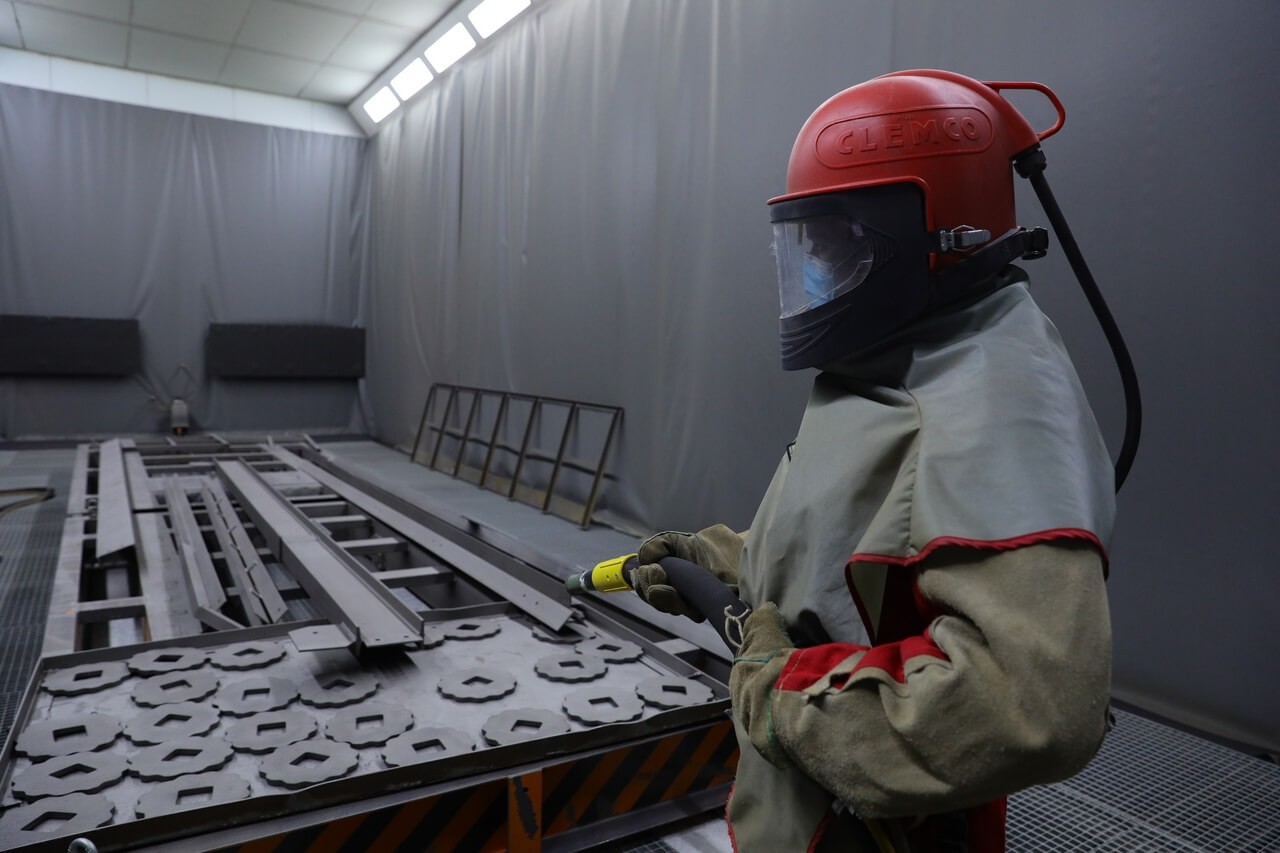
TWEKO Shot Blasting Chambers – The Ideal Solution for Efficient and Safe Abrasive Blasting
TWEKO abrasive blasting chambers are professional equipment designed for a wide range of applications, from industrial cleaning to detailed material processing. Equipped with advanced filtration and recirculation systems, our chambers ensure maximum efficiency, safety, and minimal environmental impact.
The TWEKO abrasive blasting chamber is perfect for working with metal, concrete, and other materials, whether removing rust, coatings, or contaminants. Our chambers are engineered to deliver high-quality processing while maintaining an optimal work environment for your staff.
Why Choose a TWEKO Abrasive Blasting Chamber?
- High Efficiency: Fast, precise abrasive blasting for all material types.
- Safety: Modern filtration systems with low dust output.
- Eco-Friendly: Abrasive recirculation and minimal environmental impact.
- Customization: Adjustable to your company’s specific needs.
Don’t waste time on less effective solutions. Invest in TWEKO abrasive blasting chambers to boost your workflow productivity. Contact us today for more information and discover how our chambers can help you achieve superior results!