In 2013, TWEKO successfully completed a project to supply and install a painting complex for Elektrontrans LLC, a Ukrainian-German enterprise based in Lviv, specializing in the production of trams, buses, and other public transport vehicles.
In 2012, Elektrontrans LLC approached TWEKO with a technical specification for the design and manufacture of a painting complex for painting and drying electric transport components. Given the scale of tram production, the initial concept envisioned a complex with three sections:
- a painting and drying chamber for large vehicles,
- two ventilation chambers for preparatory processes,
- a set of lifting and movable platforms for operators.
However, the construction of the second ventilation chamber was postponed to the next phase of the project.
After agreeing on the technical requirements, the TWEKO team fully tailored the equipment to the client’s specific needs:
- developed the painting complex design,
- manufactured all necessary components,
- delivered and installed the equipment at the facility in Lviv.
Painting and Drying Chamber for Electric Transport
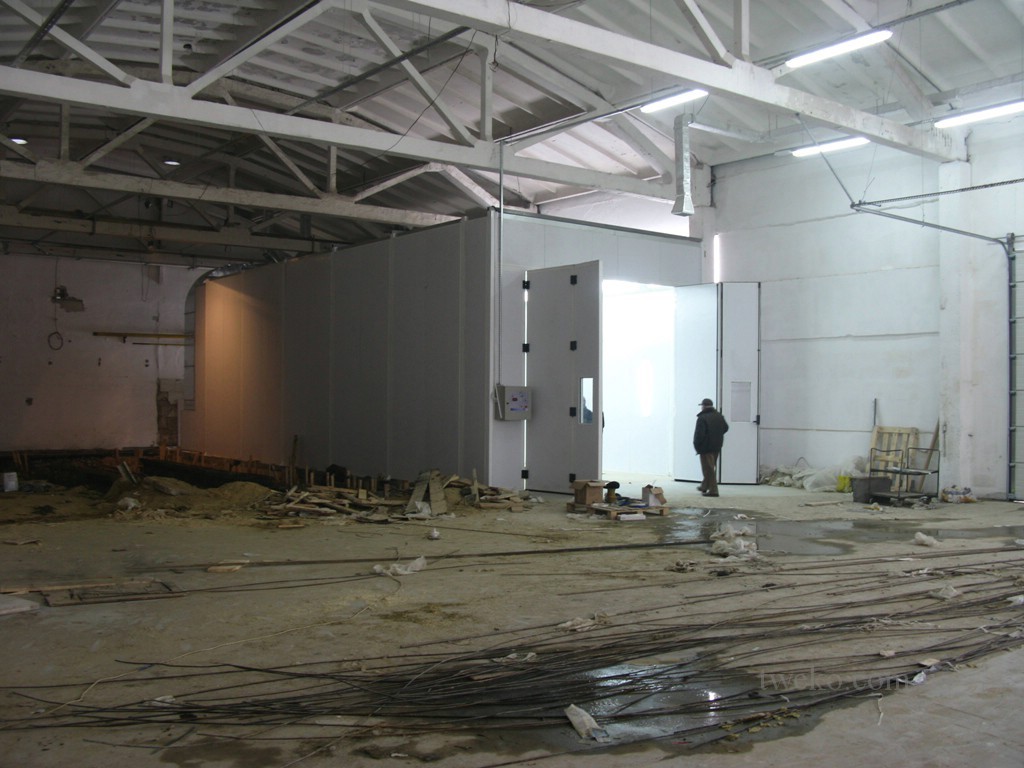
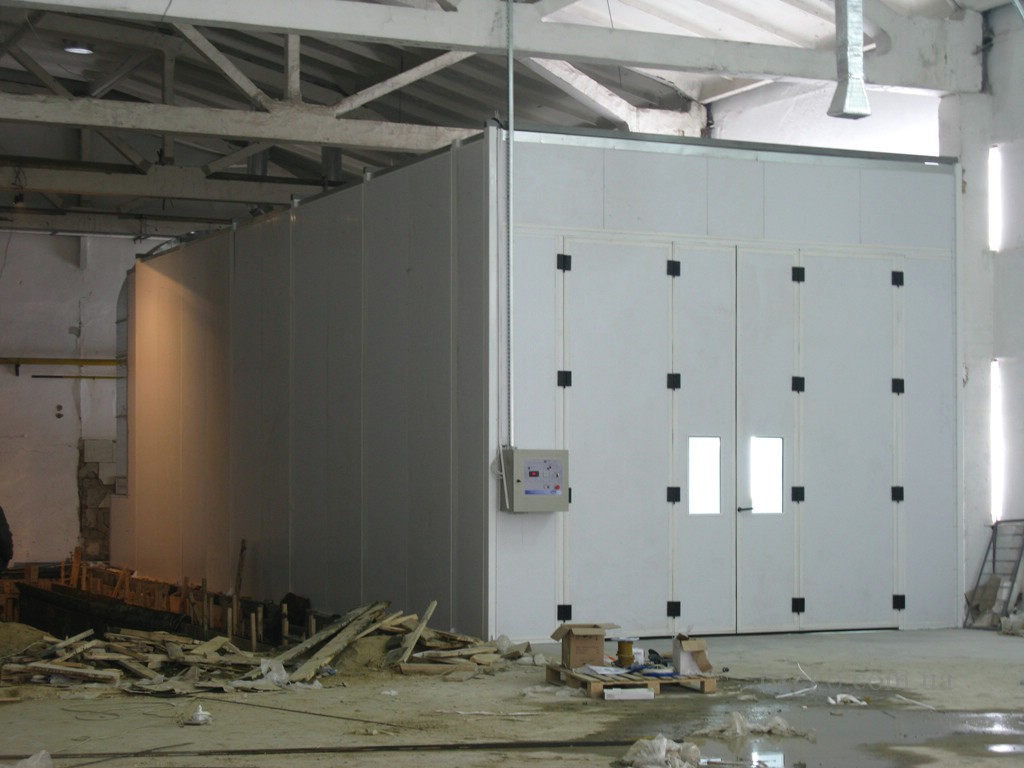
The painting chamber was specifically designed for the Elektrontrans factory in Lviv, taking into account the specifics of producing trams, buses, and other large vehicles. Work on the complex began in September 2012, and by March 2013, the equipment was commissioned.
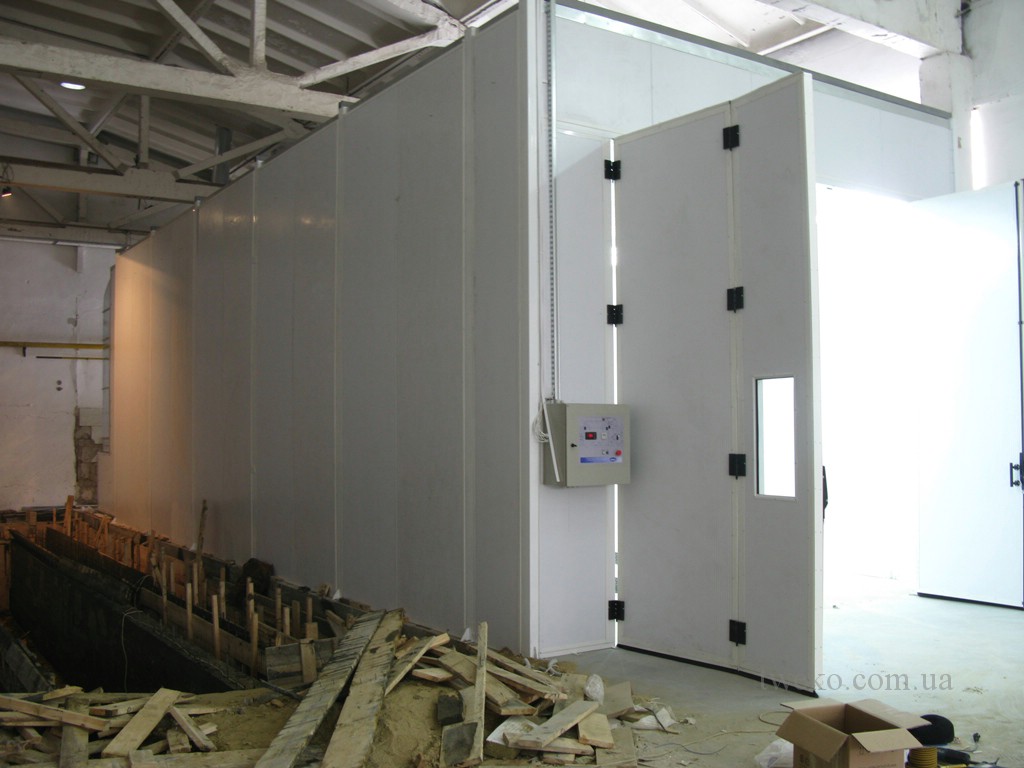
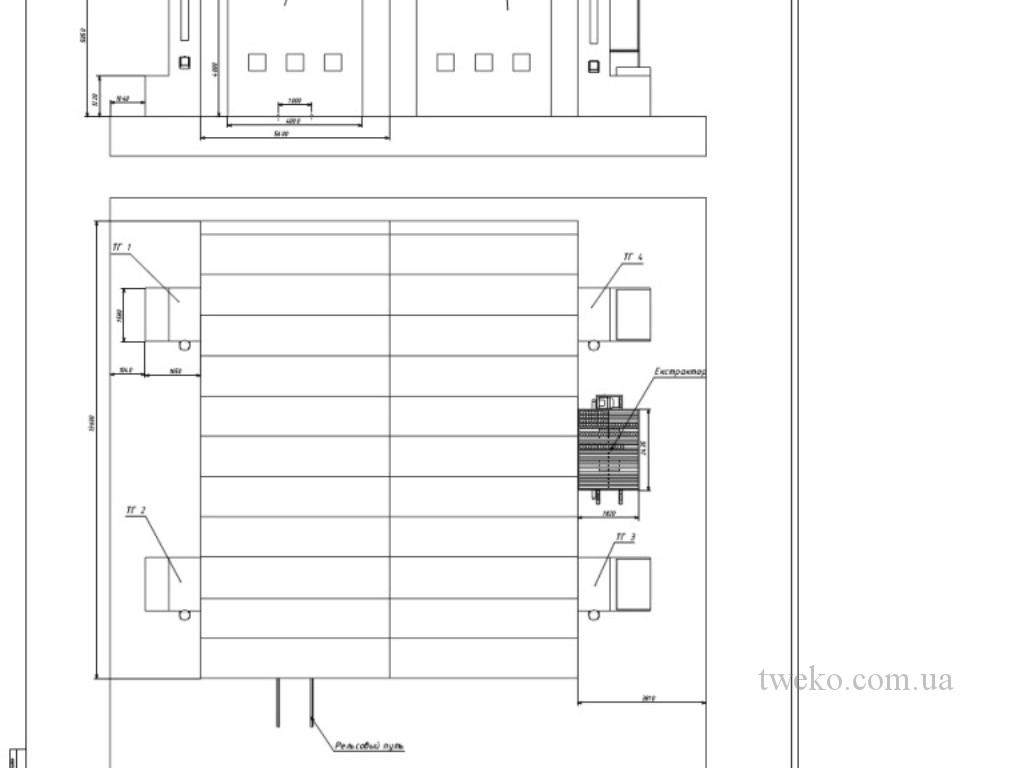
The chamber, along with the ventilation zone, is installed on foundation bases with integrated air ducts for exhausting used air. This design enables a complete cycle of painting operations — from surface preparation to drying of paint materials.
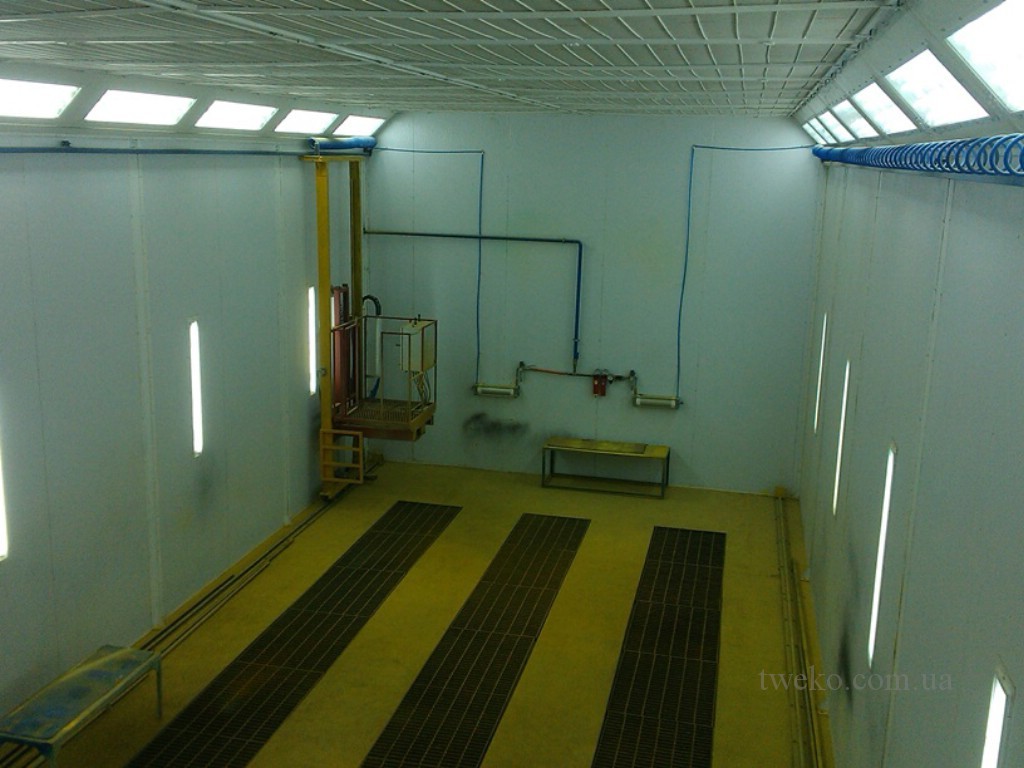
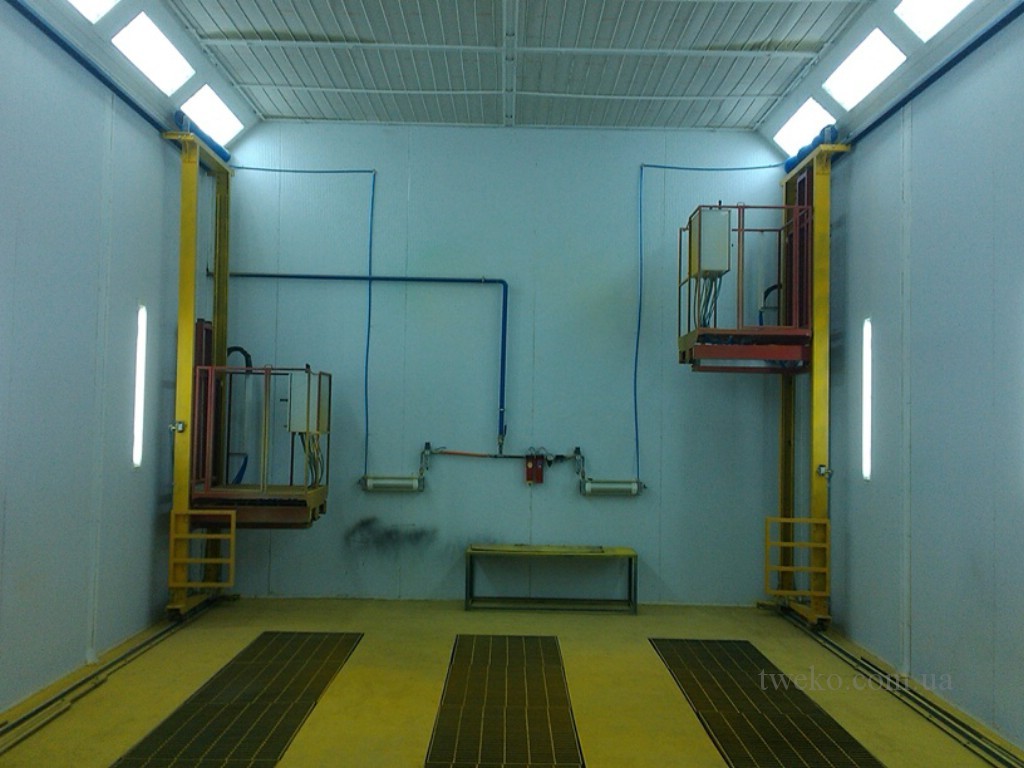
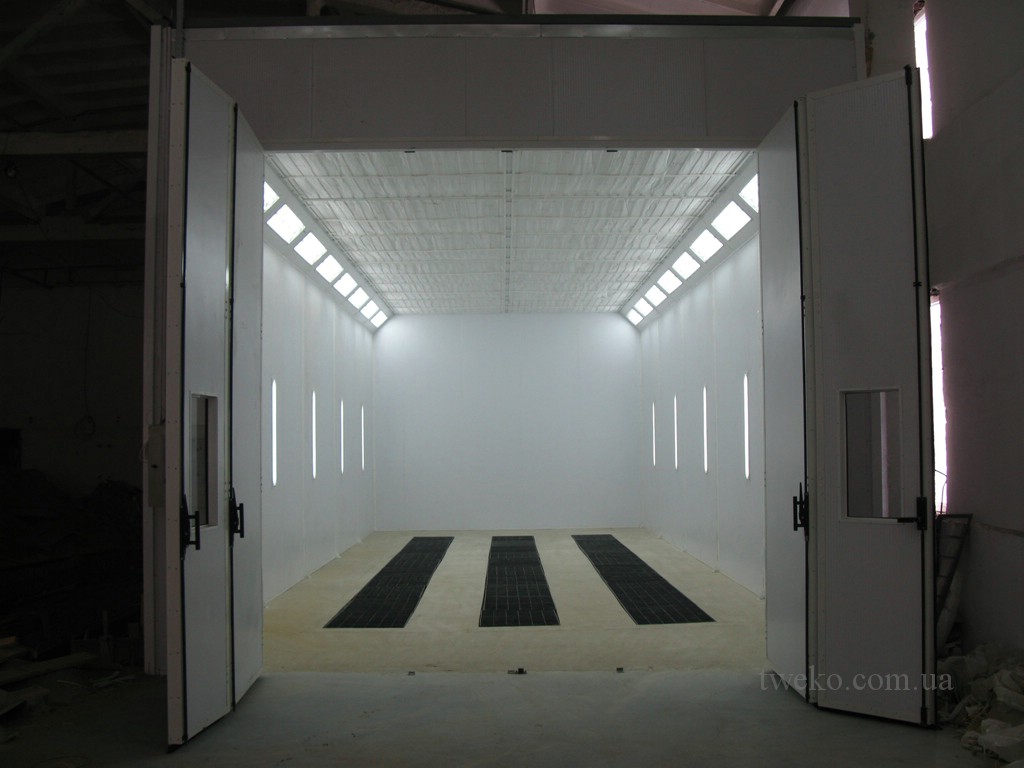
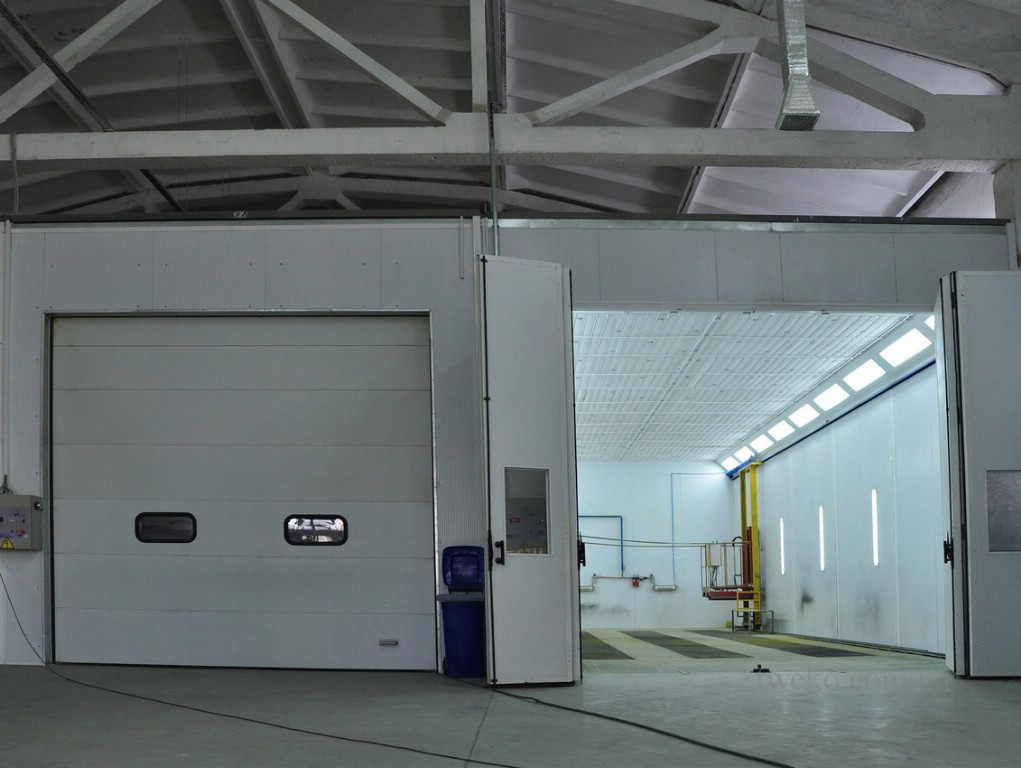
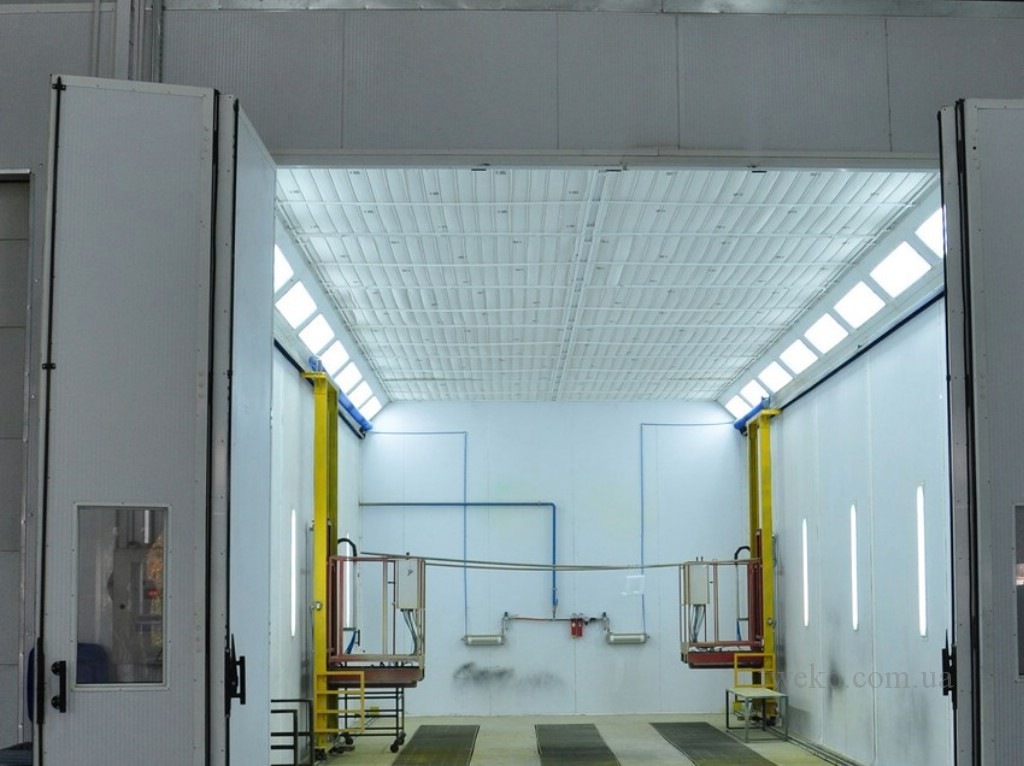
I. Painting Chamber Cabin has internal dimensions of 13.5 × 5 × 4.5 m. The chamber’s space is protected from environmental influences, preventing dust from settling on painted surfaces and providing thermal insulation. The cabin includes the following main components:
- Walls and ceiling of the painting chamber for vehicles are made of sandwich panels with fire-resistant filler, 80 mm thick, and a galvanized two-layer polymer coating consisting of a zinc sheet (275 g/m²) and a polymer paint layer (0.55 mm). The panels are resistant to high temperatures (up to 180°C) and elevated humidity, allowing the chamber to be used outdoors.
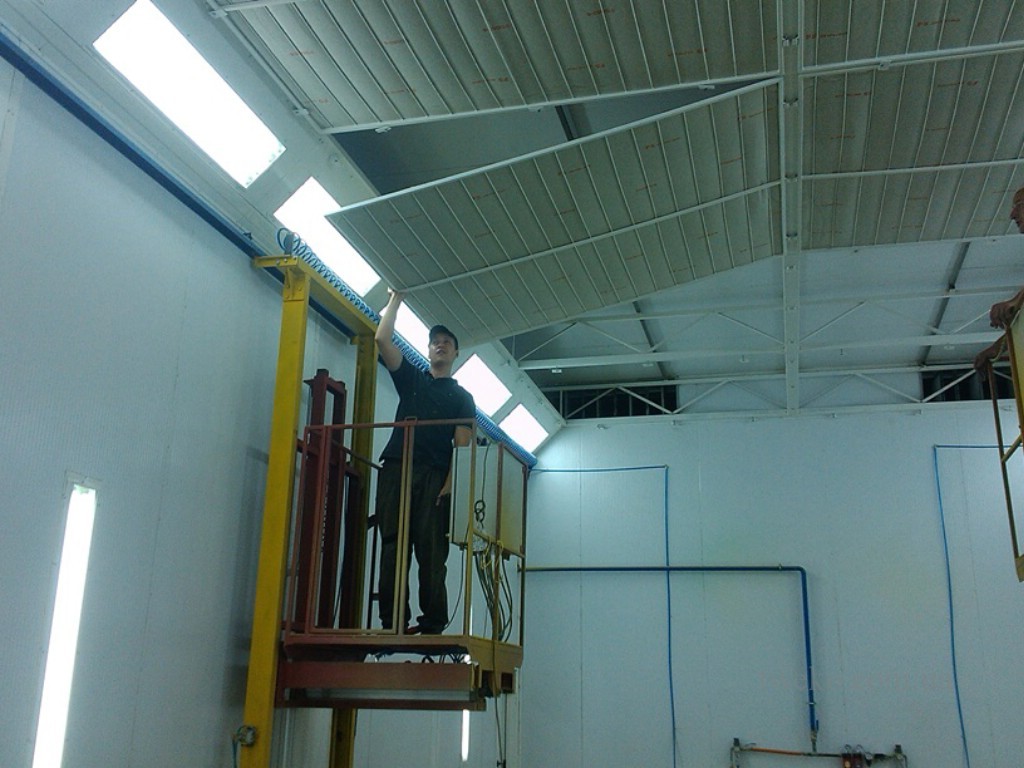
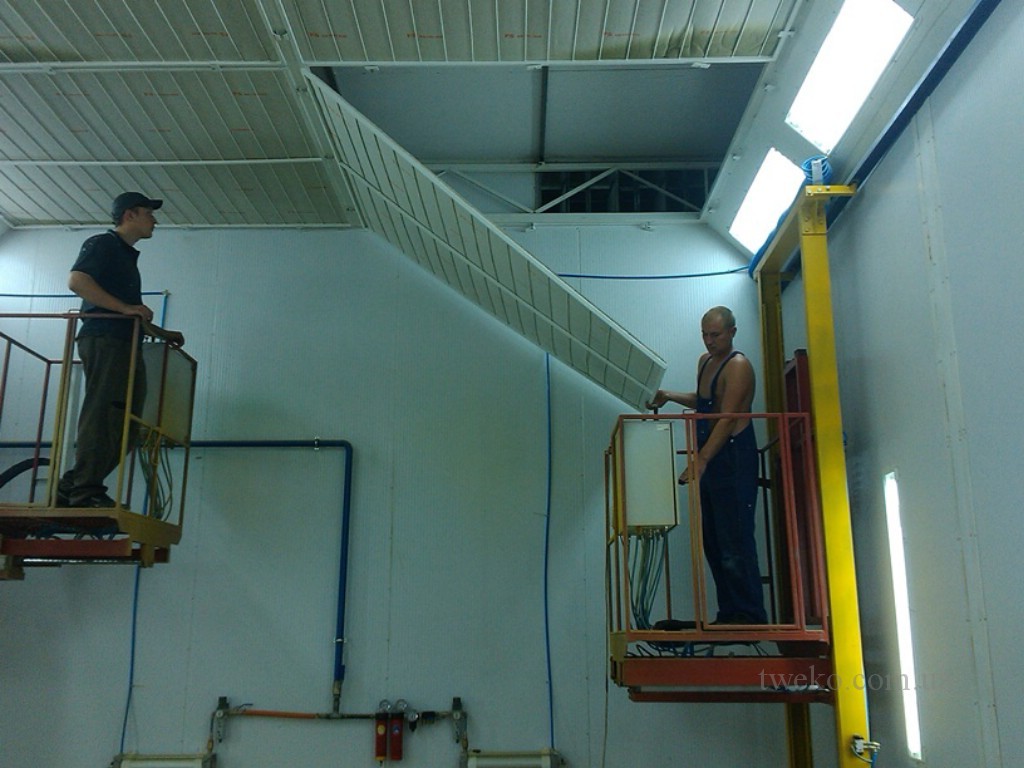
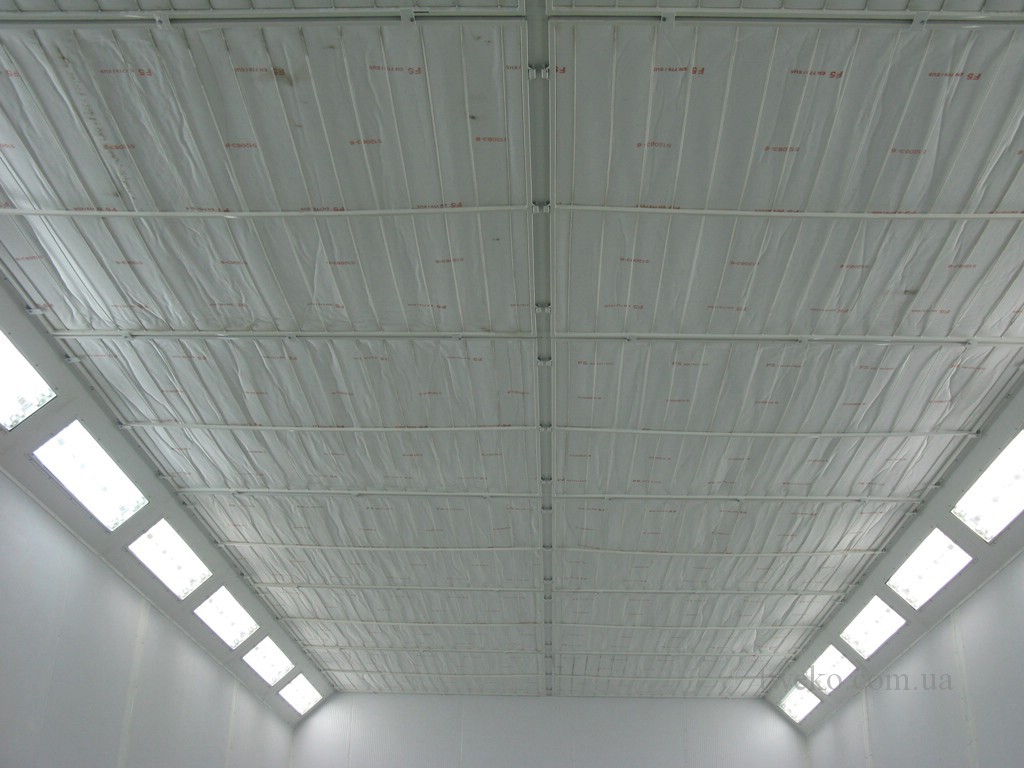
- Suspended plenum ceiling in painting chambers for buses purifies and evenly distributes heated air across the entire chamber area. It is made of profiled metal tubes and angles, with ceiling filters fixed to them, made of non-flammable material. High-quality air filtration is ensured by specially designed filter frames with excellent peripheral sealing. The ceiling frames are designed and manufactured to be easily replaceable, allowing quick filter changes.
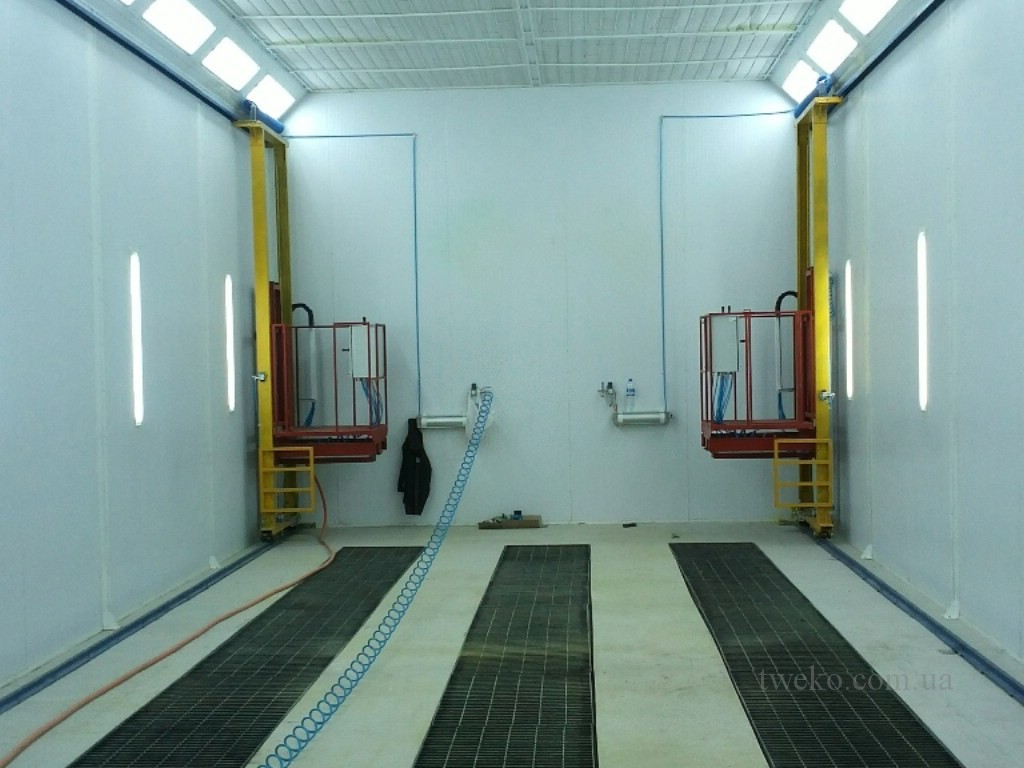
- Floor grate set in the painting chamber for vehicles with exhaust filter cassettes to capture paint mist and other suspended particles in the air discharged from the chamber. The filter cassettes are positioned vertically above the floor level in the foundation base, so putty, dust, debris, and suspended particles remain on the pit floor and do not reach the filter.
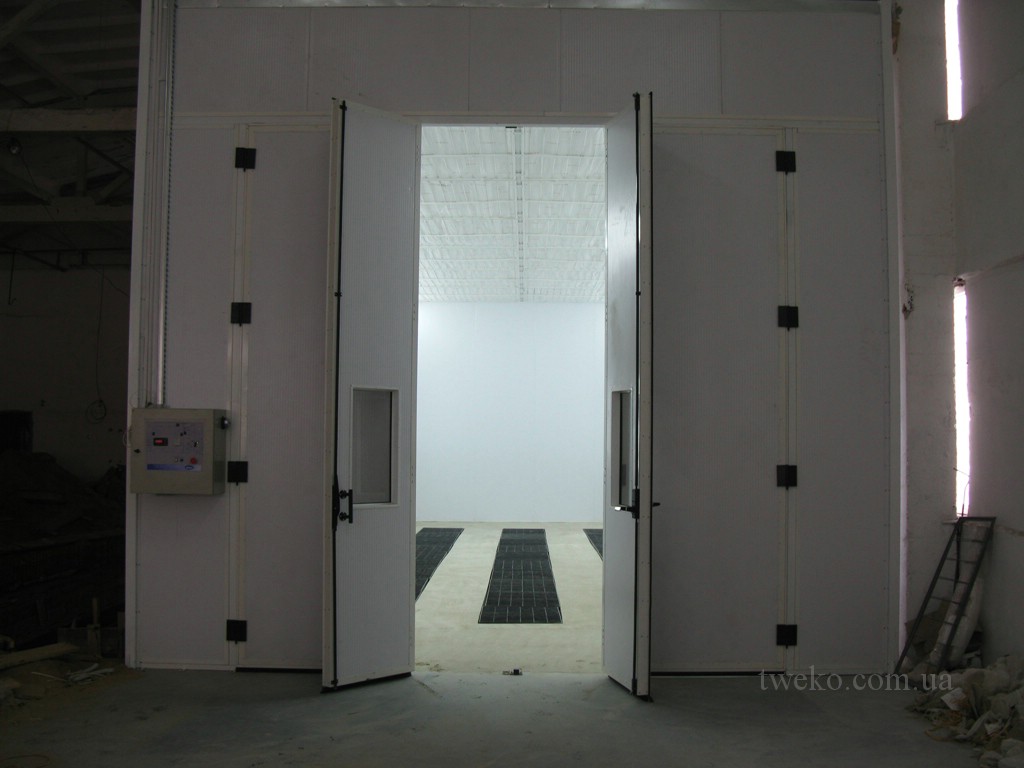
- Sealed gates measuring 3.6 × 4 meters feature inspection windows. The roller-type gates have thermal insulation and excellent sealing. The painting and drying chamber has one sealed and insulated service door for personnel access.
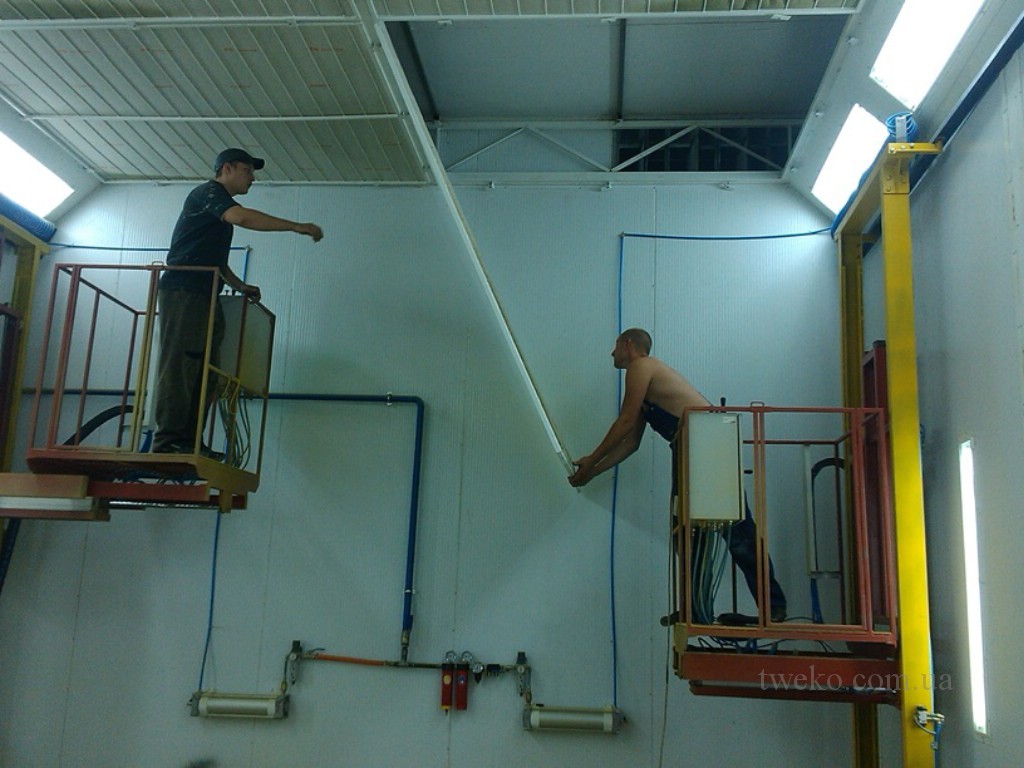
- Chamber lighting consists of two upper rows, positioned at a 45° angle to the ceiling, and two side rows of fluorescent fixtures, providing at least 1000 lux of illumination in the chamber, enabling optimal assessment of paint application quality. The fixtures have an IP65 protection rating (water- and dust-resistant).
Tram Movement — Simple and Efficient
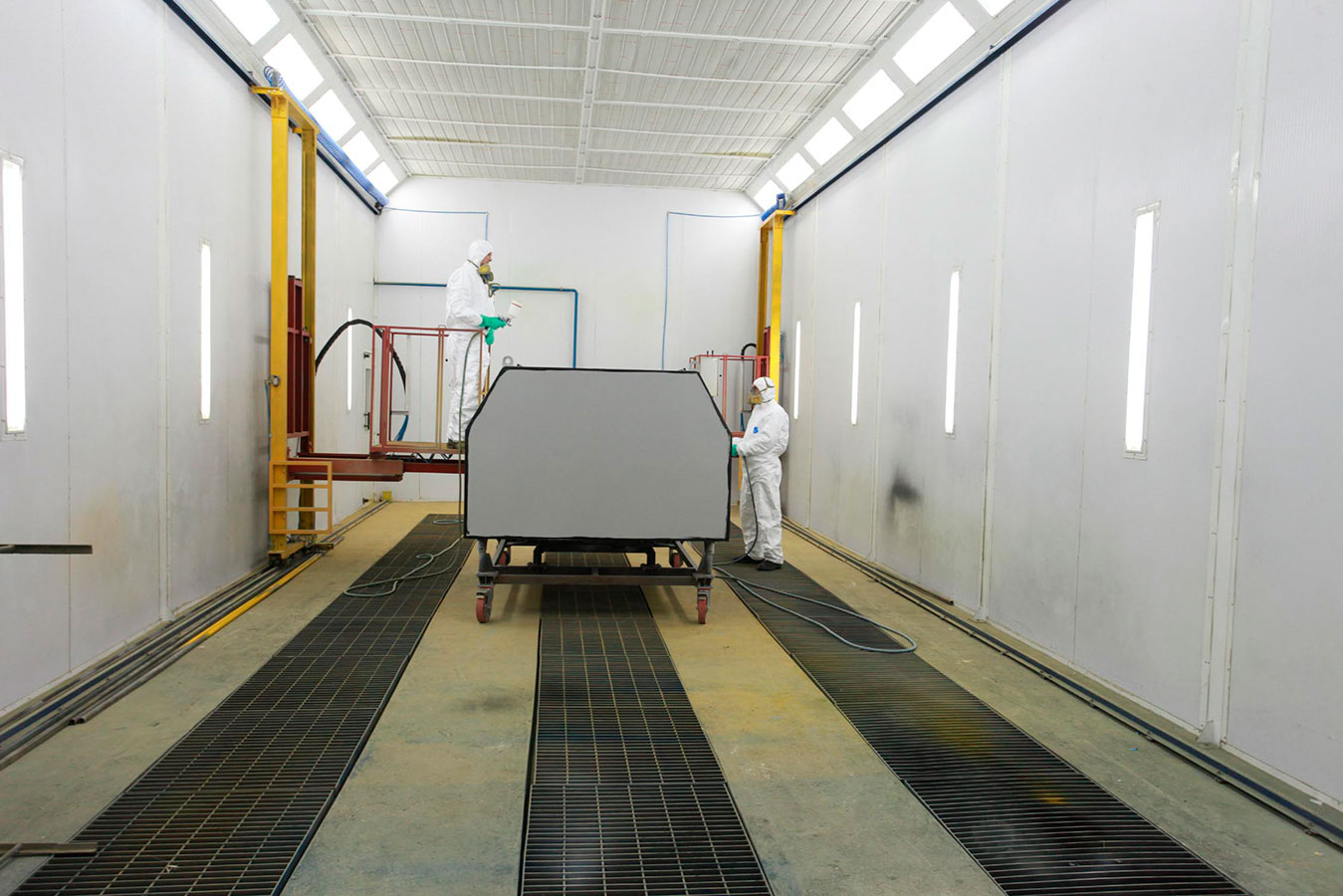
Despite the large size of a tram (11–12 m long), its movement into the chamber is done manually. Two operators effortlessly roll the item on special carts with swivel wheels designed for high load capacity. This ease of movement is facilitated by a poured industrial floor made of high-strength concrete with a perfectly smooth surface covering the entire workshop.
Thermoventilation Unit
The thermoventilation unit of the painting chamber is located behind the workshop wall, in an open space. It consists of two supply-and-exhaust thermoventilation cabinets with a total capacity of up to 80,000 cubic meters of air per hour, ensuring efficient air exchange.
These systems provide a 200-fold air exchange during painting and a 50-fold exchange during drying. The drying temperature can reach up to 70°C, ensuring fast and uniform drying of paint materials on vehicle surfaces, guaranteeing high coating quality and reducing painting and drying cycle times.
II. Thermoventilation Unit of the painting chamber consists of one supply-and-exhaust thermoventilation cabinet (TVC). It is responsible for pre-cleaning, heating, and supplying fresh air to the chamber, as well as efficiently removing and cleaning used air. The temperature is set by the operator within 16 to 24°C during the cleaning cycle. Air exchange is maintained at a minimum of 50 cycles per hour, ensuring stable air supply, high-quality item ventilation, and effective removal of putty residues, dust, and other contaminants from surfaces and the chamber’s volume. The TVC includes:
- Powerful centrifugal fan with an electric motor, with a capacity of up to 35,000 m³/hour.
- A heat exchanger made of heat-resistant steel with a gas burner type NG 350 by CIB Unigas is used as the heat generator.
- Damper valves for supply, exhaust, and air recirculation are controlled by electric drives, ensuring their automatic opening and closing. The valves’ operation is synchronized with the control panel, equipped with automation and control systems.
- Pocket-type pre-filter is designed to capture coarse contaminants, purifying the air before it enters the suspended plenum ceiling, where it is evenly distributed throughout the chamber.
Ventilation Chamber — Preparation Zone
In the ventilation chamber, the item is prepared for painting: degreasing, puttying, sanding, and other technological operations. The chamber is equipped with a highly efficient ventilation system with an air exchange rate of up to 50 cycles per hour, enabling rapid removal of dust and suspended particles, ensuring air purity and safety for personnel.
Painter’s Lift
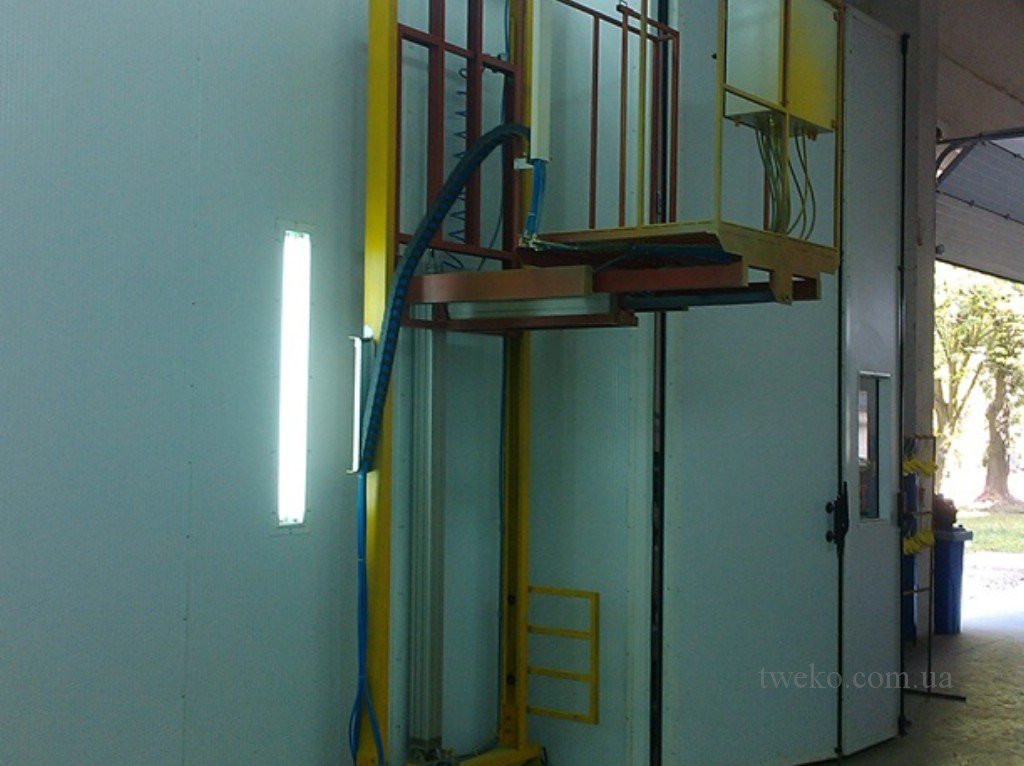
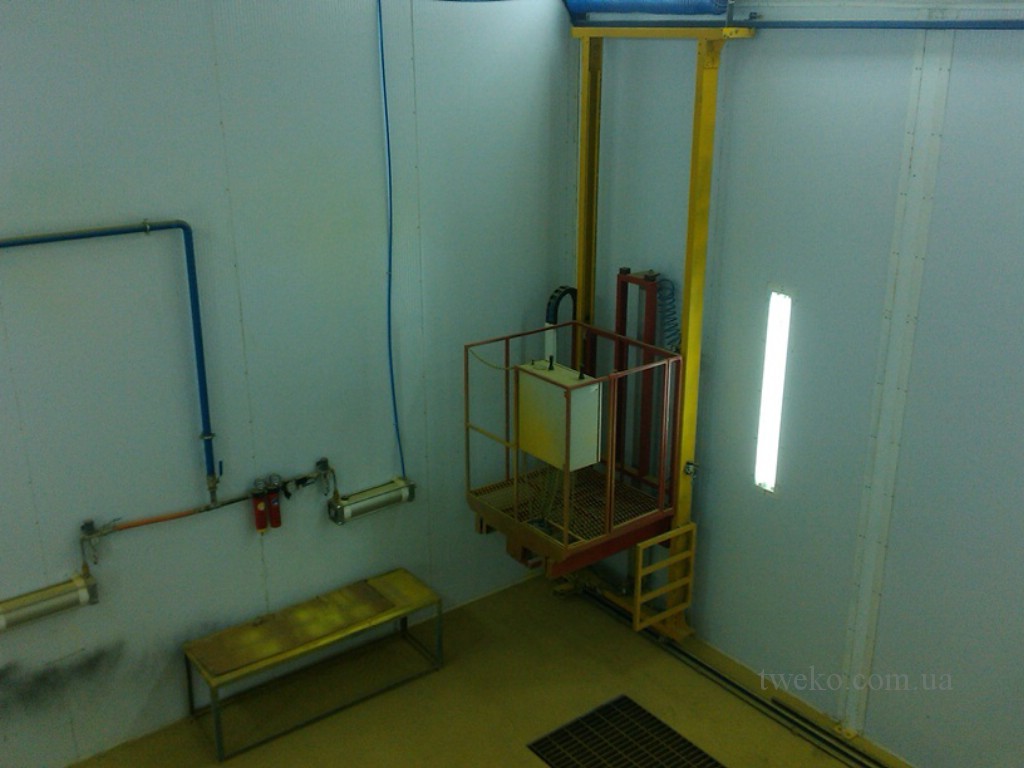
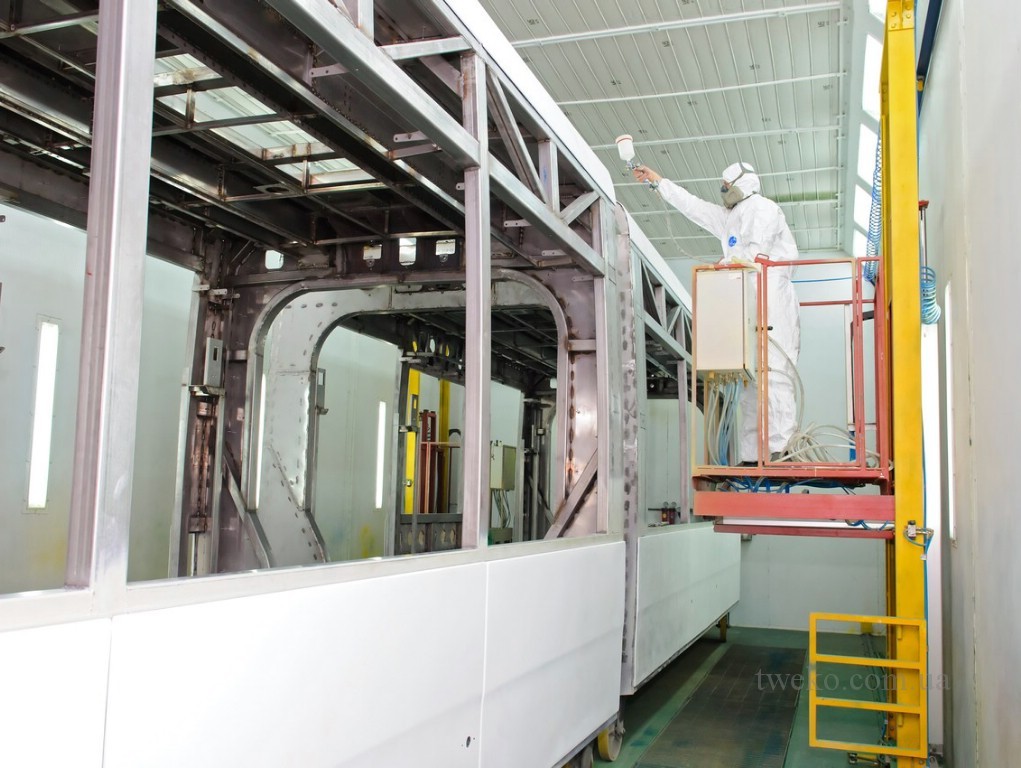
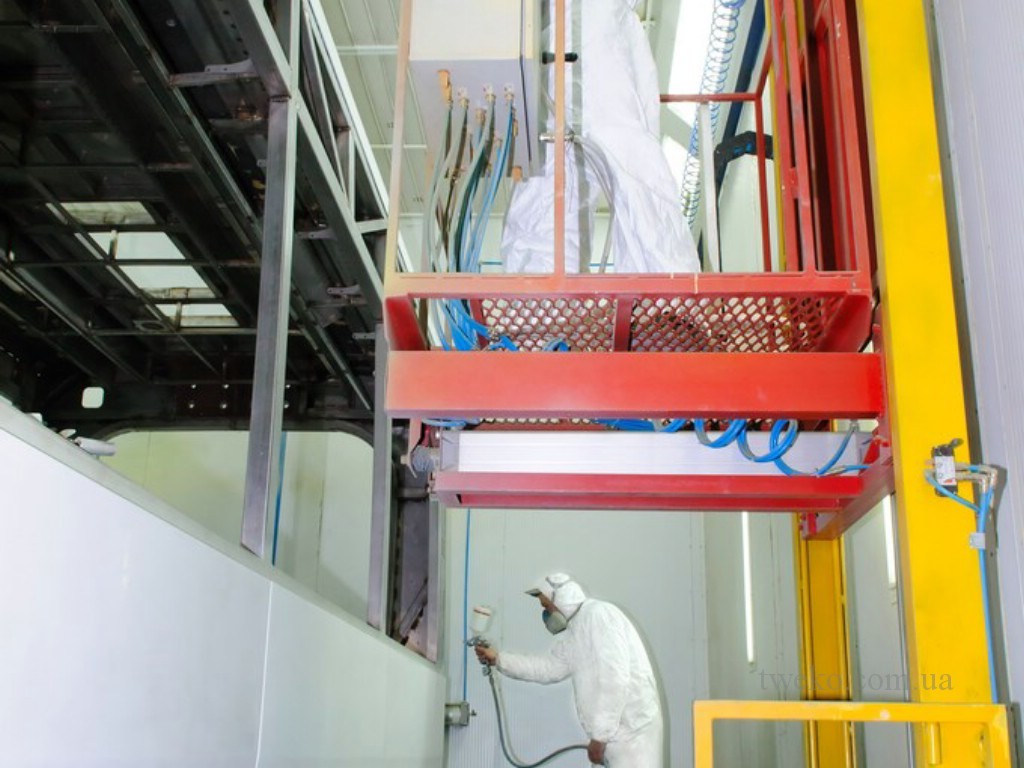
III. The painting chamber is equipped with a painter’s lift. The painter’s lift is positioned along the chamber’s side walls. Operators use them to move quickly along the item. The lifts move in three directions — along the wall, up and down, and from the wall to the item. The lift has a pneumatic drive and operates from a general compressor, with minimal air consumption.
Painter’s Lift Specifications:
- Range from the wall ≈1200 mm
- Maximum load capacity ≤150 kg
- Working lift height 2500 mm
- Working air pressure 6-8 bar
- Net weight ≈350-400 kg
- Maximum noise level during operation ≤85 dB
Thanks to the painter’s lift, the painting speed of the item increases by 50-60%.
Painting Chamber Control Panel
IV. Painting chamber control panel with automation and control systems for the painting chamber. It consists of a set of sensors for monitoring pressure, airflow, temperature, counters, and regulators, etc. They are synchronized and control all components of the painting chamber for vehicles. Additionally, the control panel is equipped with frequency converters, which regulate the rotation speed of electric motors and, consequently, the airflow in the chamber.
This complex has been successfully operating for over a year, supporting the state program for municipal transport production.
Advantages
- High-quality paint coating due to a well-thought-out design.
- Reliability and durability of equipment under intensive use.
- Operator convenience thanks to lifting and movable platforms.
- Flexibility through upgrades for new tasks.
Conclusion
This project, implemented in 2012–2013 and upgraded in 2015, vividly demonstrates TWEKO’s ability to develop and deliver reliable and efficient solutions for complex industrial tasks across various sectors. Together with Elektrontrans LLC, we created a complex that ensures high productivity and equipment durability, meeting the most modern safety and environmental standards. We are proud of our collaboration with such a prominent enterprise and are always ready to support our partner companies with high-quality and reliable equipment that optimizes production processes and enhances efficiency. TWEKO provides comprehensive technical maintenance, including equipment upgrades and support throughout its operational life, ensuring stable and uninterrupted performance even in challenging conditions.