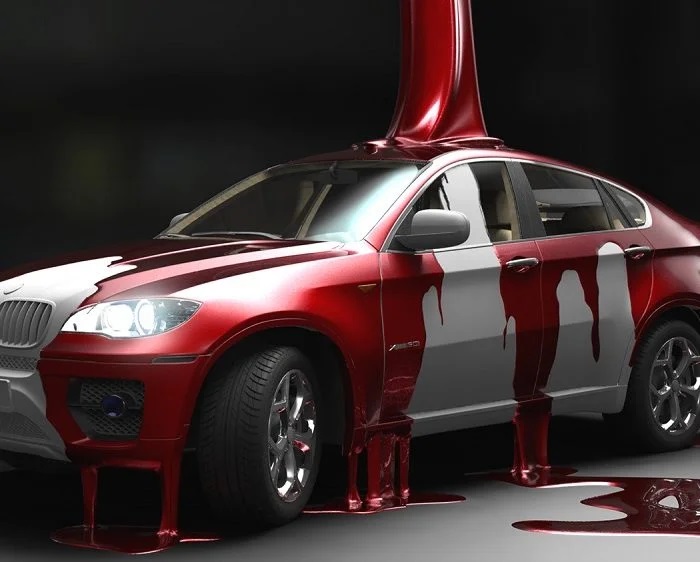
Modern types of car paint offer a wide range of possibilities for design solutions and surface protection. On the one hand, this gives you a wide range of options for selecting a paint, but on the other hand, it can be a little confusing with its variety. Everything becomes much easier if you know the “match”. In this case, it will not be difficult to choose the right materials depending on the purpose and conditions of use of the car. We consider the main types of paints for cars, which are most often used in the paint booth, as well as how to apply them.
Acrylic colours
Acrylic paints for cars are among the most popular and widespread. They are produced on the basis of acrylic resins and can be used both for base coats and as a finish coat. They come in one-component and two-component versions. One-component are used more often as they are easier to apply and dry faster, while two-component provide a more durable coating due to the addition of hardeners.
Advantages of acrylic paints:
- Ease of application.
- Wide range of colours.
- Excellent UV resistance.
- Quick drying.
Although durable, acrylic is still not as resistant to bumps and scratches as some other types of car paint. In addition, acrylic paint needs to be varnished to achieve a glossy and durable finish.
Alkyd paints
Alkyd paints for cars are made on the basis of alkyd resins, which provides good elasticity and durability of the coating. They often provide stable protection against corrosion, so they are used for painting cars to restore the factory appearance and protect the bodywork from external factors.
Advantages of alkyd paints:
- Strength and durability.
- Elasticity with temperature changes.
- Anti-corrosion properties.
Among the disadvantages are long drying time and tendency to fade: over time, such colours can lose their brightness and saturation when exposed to sunlight.
Epoxy paints
Epoxy paints based on epoxy resins are most often used as primer coatings for metal. They form a strong protective layer, which is also excellent in preventing corrosion. Epoxy paints are also often used for car restoration or for painting elements exposed to aggressive environmental influences.
Advantages of epoxy paints:
- High resistance to chemicals.
- Strength and durability.
Among the disadvantages – epoxy paints are used mainly for protection and do not have the same wide range of colours as acrylic or alkyd paints. In addition, the process of applying epoxy paint requires strict conditions and skills, which complicates its use at home.
Polyurethane paints
Polyurethane paints are two-component coatings based on polyurethane resins. They are characterised by high strength and durability, which makes them the optimal choice for vehicles that are used in harsh conditions. The colourant forms a protective layer that is resistant to aggressive environmental factors including UV light, precipitation and mechanical damage.
Advantages of polyurethane paints:
- Excellent resistance to external influences.
- Durability of the coating.
- Glossy finish.
Disadvantages: they require adherence to strict application techniques, which means the experience and skills of the painter. Also, this type of paint is significantly more expensive than other options, which may affect the choice when the budget is limited.
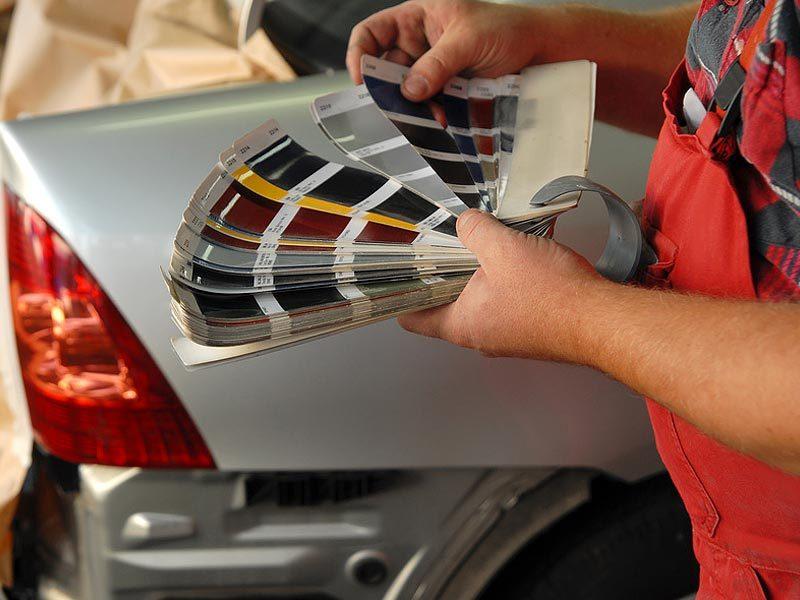
Auto enamels
Car enamels are decorative coatings designed to give the car a shine and bright colour. There are different types of car enamels: acrylic, alkyd, polyurethane and each of them has its own features. They are used to create a glossy finish and protect the bodywork from external influences. Due to the variety of types, enamels offer a rich palette of colours and the ability to create different effects such as metallic or pearlescent, providing a smooth and shiny finish that protects the bodywork from minor damage. The only thing is that enamels often require a varnish as a finishing coat to maintain their durability and lustre.
Metallic and pearlescent colours
Metallic paints for cars contain special particles that give the surface a special shine and depth of colour, as well as its shimmer. Such paints create a metallic effect, which gives the appearance of the car a more presentable and expensive look. They retain saturated colour in the sun for quite a long time compared to other dyes and always remain bright, because here for the “play of light” is responsible not pigment, but directly metal particles in the composition. The disadvantages are that it can be difficult to repair damage to such a coating, especially if reapplication is necessary.
Powder paints
Powder coatings are used in the automotive industry to create a tough and durable coating. They are applied as a dry powder and then baked at high temperature, which makes them particularly resistant.
Advantages of powder coatings:
- Durability. Forms a highly resistant coating that is not afraid of mechanical damage and environmental impact.
- Environmental friendliness. No solvents are used in the powder coating process, making it more environmentally friendly.
The downside is that powder paints don’t have the same wide range of colours as liquid paints.
What to look for when choosing a paint
So which paint to choose? It all depends on your needs. To restore the appearance and repair the body of cars, including old ones, it is recommended to look towards epoxy and alkyd paints. Do you need a bright saturated colour? Your choice is acrylic or pearlescent. Need a durable coating and no budget constraints? Apply polyurethane. In any case, the most important thing is to apply the paint professionally. Only then you will get an excellent result.