
Painting metal is not just a technical task, but an important process that determines the durability and resistance of the product to external influences. The paint and materials you choose may be of the highest quality, but without proper surface preparation, all efforts will be in vain. How thoroughly you prepare the metal for painting depends not only on its appearance, but also on the service life of the coating.
If you have decided to renew your car in the car paint booth or create a unique piece of decor, then this text is for you. Here we will reveal all the secrets of preparing the metal surface, from removing rust to applying primer, so that the result of your work will be flawless. Ready to learn how to turn even the most ordinary piece of metal into a real work of art? Then let’s get started!
Brief overview of the preparation steps
Preparing a metal surface for painting involves several basic steps:
- Cleaning of the surface from contaminants.
- Rust stain removal.
- Sanding and levelling of the surface.
- Surface Degreasing.
- Additional surface treatment with special agents.
- Metal priming.
- Final surface inspection and removal of defects.
Each of these steps is important to achieve the perfect result, and skipping even one can result in a very significant reduction in paint quality.
Cleaning the metal surface. How to clean metal before painting?
The first stage of preparation is to clean the surface from various contaminants: dust, dirt, oil, old paint. This is extremely important to ensure even application of the paint and prevent it from peeling off over time.
Metal brushes, scrapers or sanders can be used to remove coarse dirt and old paint. These are effective at removing basic dirt, but may leave fine scratches on the surface that will need to be removed in the next steps.
Chemical agents such as solvents and degreasers are used to remove residual oils and grease. They penetrate deeply into the metal surface and remove even the smallest contaminants, which is especially important for subsequent degreasing.
Rust removal
Rust destroys the metal, reduces the adhesion of the paint and also has the ability to spread. Therefore, its complete removal is an essential preparation step.
How to remove rust before painting? Several methods can be used for this purpose, depending on the degree of surface damage:
- Mechanical method. Use metal brushes, sandpaper or grinders to remove surface rust. This method is effective for treating small corroded areas.
- Chemicals. The use of rust converters or special acidic formulations can effectively remove corrosion even from hard-to-reach areas. They convert rust stains into inert compounds that can be easily removed from the surface.
- Sandblasting. This method is used to remove rust from large areas and complex shapes. It effectively cleans the metal to a “white” state, providing an excellent base for painting.
Depending on the degree of damage to the metal, one of the above methods should be used. It is good if the technician has access to all the necessary equipment to do the job much better.
Grinding and levelling of the surface. How to treat iron before painting
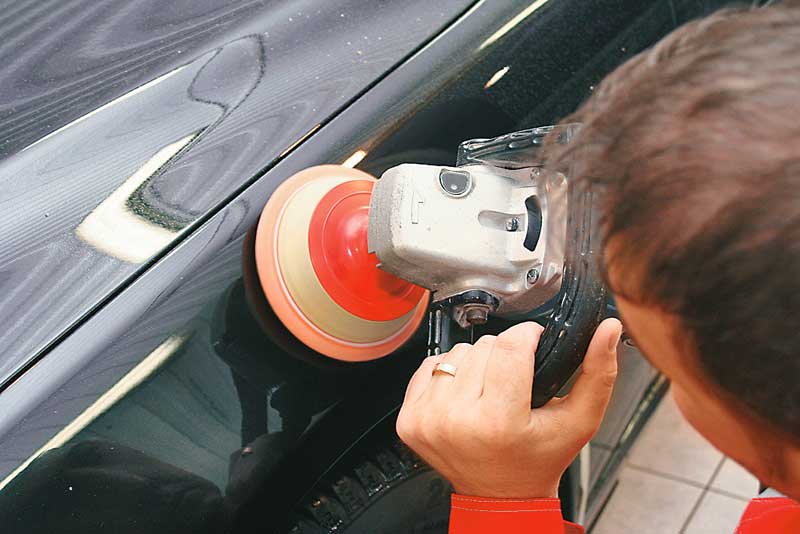
After rust removal, the surface must be sanded to remove minor imperfections and scratches and to smooth the metal. To sand the metal surface, you can use sanders, abrasive discs or sandpaper with grit from P120 to P240, depending on the condition of the surface. It is also a good idea to buy a shot blasting machine. Sanding removes old coating residues, smooths out irregularities and creates a micro-roughness that will improve the adhesion of primer and paint.
Degreasing the surface. How to degrease metal before painting?
It is recommended to use special degreasers based on organic solvents or alcohol solutions to degrease metal surfaces. They effectively remove fats and oils without leaving any residue on the surface. Apply the degreaser with a clean lint-free cloth or sponge, wiping the surface in a circular motion or using special equipment.
Additional surface treatment
After degreasing, we recommend additional surface treatment with special agents that improve paint adhesion and protect the metal from corrosion.
Anticorrosive agents and primers with rust inhibitors can be used to treat iron before painting. These products create a protective layer on the metal surface, preventing corrosion under the paint layer.
If the surface still shows signs of corrosion, a rust converter should be used, which converts iron oxides into stable compounds, providing a solid base for subsequent primer and paint application.
Metal priming. How to coat metal before painting?
Priming is a key step in preparing the surface for painting, which ensures the adhesion of the paint to the metal and protects the metal from corrosion.
How to primer metal for painting? For priming metal before painting it is recommended to use special primers for metals – epoxy or acrylic. They provide excellent adhesion of paint with the surface, creating a strong basis for its application.
The primer is applied with a brush, roller or sprayer depending on the type of surface and scale of work. It is important to apply the primer evenly, avoiding drips and skips. For best results, it is recommended to apply two coats of primer with intermediate drying.
Final inspection of the surface for defects and their elimination
After priming, perform a final inspection of the surface for defects such as minor scratches, dents or air bubbles. Inspect the surface in good light to identify any possible nuances and pay special attention to edges, corners, hard-to-reach places where the primer may be unevenly applied.
For minor defects, fine sandpaper (grit P320 and above) can be used to lightly sand the problem areas. If more serious defects such as dents or deep scratches are found, they should be puttyed and re-primed.
Completing the process of preparing a metal surface for painting is not just a matter of following sequential technical steps, but a real art that requires attention to detail and understanding of all the nuances. By paying due attention to each step and using the right materials, you are not just painting metal, but creating a reliable protection against time and external influences, giving the product an impeccable appearance. Regardless of the chosen method and means, it is the careful preparation that will always be the key to excellent results and durability of the coating.