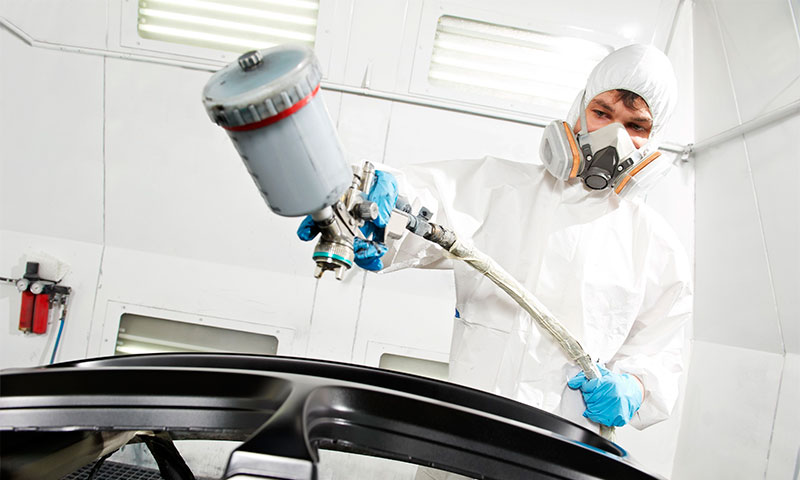
Car painting is a whole set of measures, only full compliance with which will ensure an excellent result of work. This includes the choice of materials, preparation, quality of the process, and the conditions in which the painting is carried out.
The most important thing to remember is your health. When working with paints, varnishes and solvents, toxic substances and fine particles are released into the air, which can be harmful to health, especially to the respiratory system. To prevent exposure to them, it is necessary to use a respirator. But even here there are difficulties, since its choice should be approached wisely. Today we will deal with how to choose this device, so that painting the car brings nothing but an excellent result.
How the respirator works
A respirator is a personal respiratory protection device in a half-mask form factor that filters the air, protecting a person from harmful particles and gases, toxic substances and microorganisms. Depending on the model and filter, respirators can trap both particulate matter (paint, dust) and gases (solvents, aerosols). The way a respirator works allows it to be used in a wide variety of environments, including painting, which is exactly what we need.
Types of respirators
There are several types of respirators, which are classified according to the type of protection and the specifics of use. They differ depending on whether the threat is particulate matter, gaseous substances or vapours.
The main types of respirators:
- Against dust. Designed to protect against small solid materials such as dust, paint particles, sand. They filter the air by passing it through a special filter and trapping harmful substances.
- Against gases and vapours. Protect against harmful gaseous substances and toxic vapours, e.g. solvent vapours, by means of special fine filters and absorbents.
- Combination. Contains filters that trap both dust and gases at the same time. These respirators provide a higher level of protection and are often used when working with paints and chemicals.
Protective masks usually have removable cassettes that can be replaced as they become soiled. This allows the respiratory protection to be renewed quickly and in a timely manner.
Respirator protection classes: FFP1, FFP2, FFP3
There are classes of respirator protection, each corresponding to a different degree of filtration of harmful substances:
- FFP1 – minimum protection. Protects against large particles such as dust, but cannot protect against small toxic substances. Suitable for use in environments with low dust concentrations, e.g. roadworks, construction sites.
- FFP2 – medium level. These masks are effective against fine particles and some gases, but may not handle highly concentrated toxic vapours. They are often used in sanding and painting operations.
- FFP3 – the maximum level of protection. FFP3 respirators filter up to 99% of fine particles and toxic substances. It is the best choice for working with hazardous paints and chemicals.
Of course, much also depends on the quality of the accessory, so you should pay attention to products from trusted manufacturers who guarantee that the product meets its stated characteristics. To determine which respirators are better, read forums and look for reviews on specialised sites.
Respirators with filters: features and advantages
Respirators with filters offer additional protection against toxic gases and chemicals. They are equipped with replaceable filters that can trap dangerous vapours and the person can choose the type of filter. This is very convenient for multi-purpose work, but there may be a problem with finding the right filter specifically for your protective mask – it may not fit it purely mechanically.
Criteria for selecting a respirator for painting
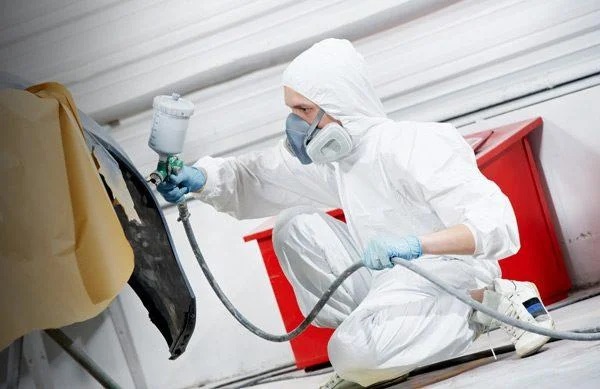
In order to understand which respirator to choose for painting, it is necessary to consider first of all the type of filter. For painting, it is recommended to use respirators with combined filters. It is also worth paying attention to the service life of the filters: if they are disposable, they should be changed regularly to maintain maximum effectiveness.
As for the protection class, it is better to choose FFP2 or FFP3 respirators for painting. It is important to remember that the higher the protection class, the more harmful substances are retained by the respirator, which is especially important when working in closed rooms or a car paint booth.
It is also important to remember that painting a car can take a long time, so a respirator must be comfortable. Models with an exhalation valve provide more comfortable breathing, preventing moisture accumulation and overheating inside the mask.
How to determine the size of a respirator
For maximum effectiveness, the respirator should fit snugly around the face without letting air in at the sides. To find out which size is right for you, measure the distance from the bridge of your nose to the bottom of your chin and choose a mask based on these measurements. Some manufacturers offer respirators in different sizes (small, medium, large), which allows you to find a model that fits you perfectly.
Types of filters for respirators
Respirator filters are divided into several types and correspond to the classification of the protective masks themselves. These are:
- Mechanical. Traps solid particles such as dust, paint or sand.
- For gases and vapours. Protect against gaseous substances and toxic vapours such as solvents or organic-based paints.
- Combination. Combines mechanical and chemical protection.
For water-based paints, a mechanical filter is suitable, as these paints do not emit toxic vapours. If you are using solvent-based paints or aerosols, you will need protection with a gas filter.
Disadvantages and limitations of respirators
Despite the high efficiency of respirators, they have some limitations. In particular, as we mentioned above, filters have a lifetime and must be replaced regularly, especially when working in environments with high concentrations of harmful substances. A maximum of 4 hours of operation is how long you can work in the respirator, taking into account downtime and breaks. For models with a valve, this figure may be slightly higher. Also remember that if the respirator does not fit properly on the face or is not the right size, its effectiveness is greatly reduced.
The right respirator is a combination of reliable filters, the right protection class, comfort and a perfect fit. By following these simple but important guidelines on how to choose a respirator, you can make a choice that will give you the confidence and comfort you need to make any painting job a safe and productive one.